Description
Louisiana broomrape (Orobanche ludoviciana) is a parasitic plant belonging to the family Orobanchaceae. It is a total root parasite, meaning it lacks chlorophyll and cannot perform photosynthesis. It survives entirely by attaching itself to the root systems of host plants, diverting water, minerals, and carbon compounds essential for its growth and survival.
The species is native to North America, primarily distributed across the United States and Mexico. It naturally inhabits arid environments, including prairies and desert-like regions. Over time, it has evolved to colonize agricultural land, where it poses a significant threat to various crops, especially members of the Asteraceae family, such as sunflowers, which it taps into for nutrient extraction.
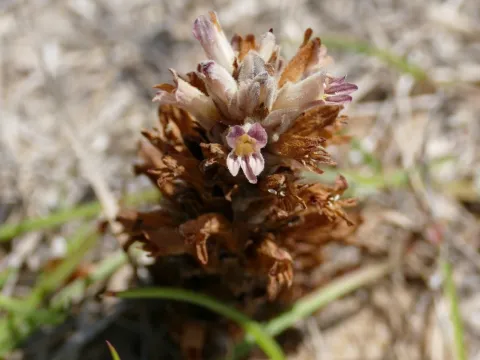
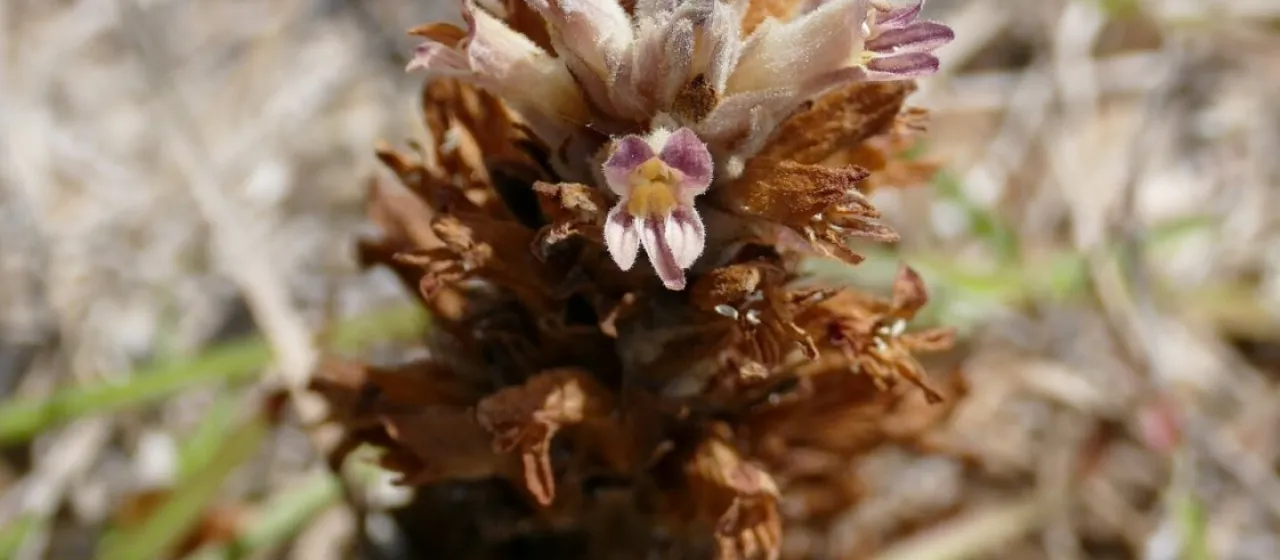
The plant exhibits distinctive morphology: it features succulent stems that reach heights of 10 to 40 centimeters. The leaves are reduced to small, brown scales. It produces dense, showy spikes of flowers that range from pale yellow to purple. Each plant can produce thousands of minute, dust-like seeds that remain viable in the soil for many years, waiting for the specific chemical cues from a host's roots to trigger germination.
Environmental requirements for the species involve warm, well-drained soils that promote host root growth. Management is notoriously difficult because the parasite spends most of its life cycle underground. Current agricultural practices emphasize the use of parasitic-resistant crop varieties, integrated pest management (IPM) strategies, and, in some cases, the use of herbicides targeting the host-parasite connection.
Economically, Orobanche ludoviciana is considered a highly destructive agricultural weed. By parasitizing host crops, it stunts their growth, significantly reduces biomass, and can cause total yield failure in heavily infested fields. Continued vigilance and the development of new biotechnological tools are essential to prevent the spread and infestation of vulnerable croplands.
Photo gallery