Description
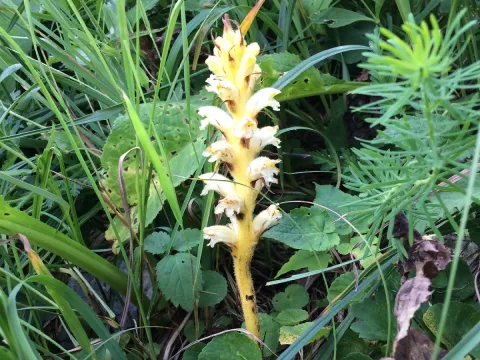
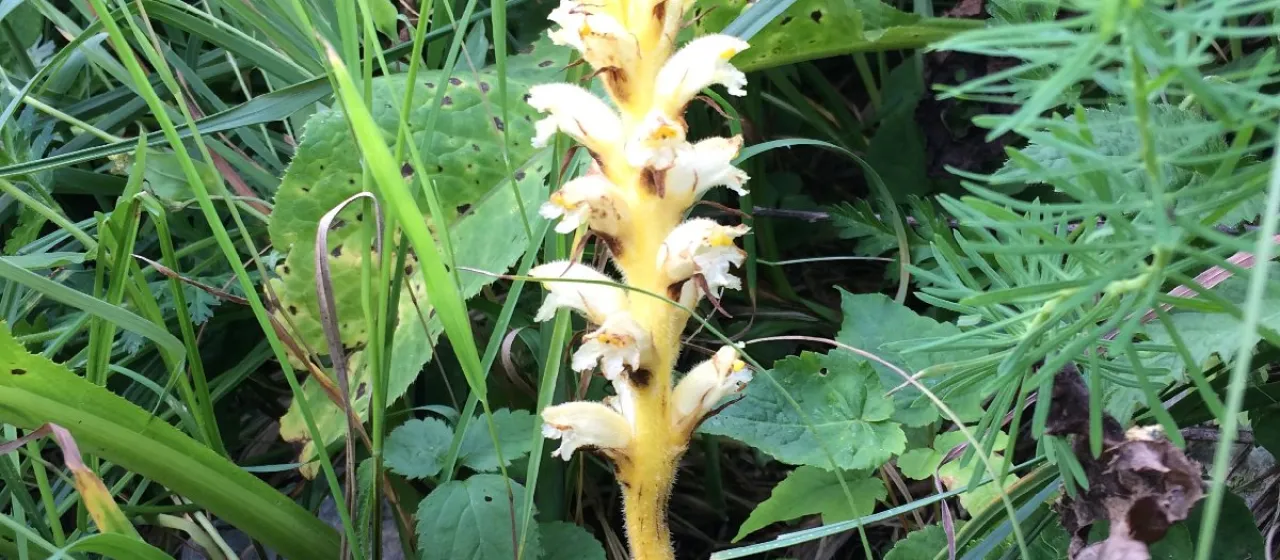
Wolfsbane broomrape (Orobanche lycoctoni) is a highly specialized holoparasitic plant belonging to the family Orobanchaceae. Unlike standard crops, this plant lacks chlorophyll and cannot perform photosynthesis. It functions entirely as a parasite, extracting water, minerals, and carbon compounds directly from the root systems of its host plants.
The native range of this species spans across the temperate and mountainous regions of Eurasia, including areas in Europe, the Caucasus, and Siberia. It is ecologically tied to plants of the genus Aconitum (wolfsbane), which serve as its primary hosts. Its habitat is typically associated with moist forest edges and nutrient-rich, shaded soils where these hosts thrive.
Botanically, the plant features a fleshy, unbranched stem, usually ranging from 20 to 50 centimeters in height. The stem is covered with scale-like leaves, and the inflorescence consists of yellowish-brown or brownish-purple flowers. Its most critical structure is the haustorium, a specialized root-like organ that physically penetrates the host root to establish a vascular connection.
The ecological requirements for Orobanche lycoctoni are dictated by the presence of its host plants. It requires soil conditions that favor the germination of its tiny seeds and the subsequent attachment to host roots. From an agronomic perspective, management involves preventing the spread of seeds through contaminated equipment and promoting crop rotations that disrupt the life cycle of the host.
- Extreme reproductive potential: a single plant produces thousands of microscopic seeds.
- Long-term seed viability: seeds can remain dormant in the soil for over a decade.
- Total dependence: the plant is unable to survive independently of the host metabolism.
- Method of dispersal: wind, water, and human-mediated movement of topsoil.
In a хозяйственном (agricultural) context, this species is strictly classified as a detrimental organism. While it primarily affects Aconitum, related parasitic species cause significant economic losses in various agricultural crops worldwide. Understanding its biological mechanisms is essential for developing effective strategies to mitigate the impact of broomrape infestations in susceptible environments.
Photo gallery