Description
Picris broomrape (Latin: Orobanche picridis) is an obligate root parasitic plant belonging to the Orobanchaceae family. As a non-photosynthetic organism, it completely relies on host plants for its nutritional needs, including water, minerals, and carbohydrates, by establishing a direct connection through its specialized organs known as haustoria.
The species is distributed across Europe and parts of Western Asia. It typically inhabits areas where its primary hosts, mainly from the Asteraceae family, are found. While it has no agricultural utility, it is classified as a harmful weed that poses a significant threat to crop vitality and overall field productivity.
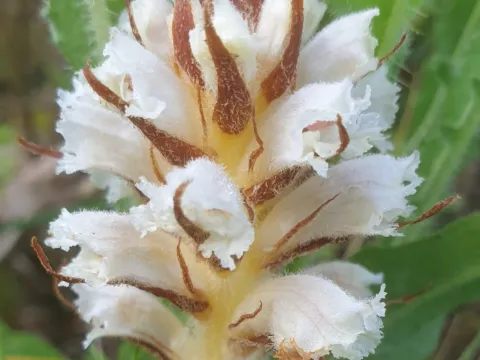
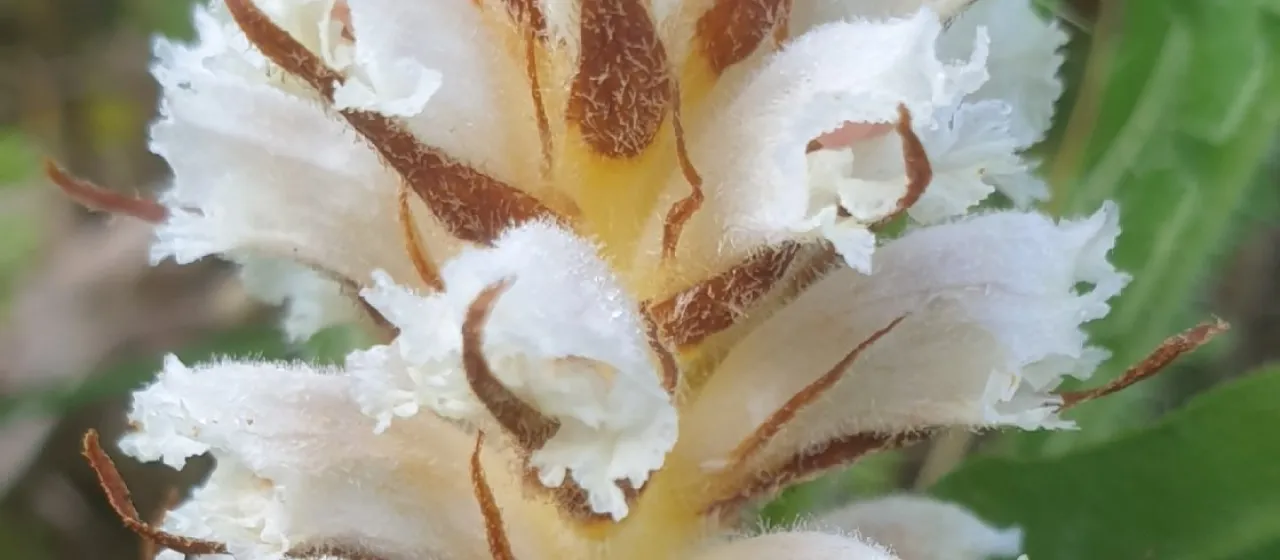
Botanically, the plant consists of a fleshy, unbranched stem adorned with scale-like leaves rather than true foliage. Its flowers are arranged in a spike-like inflorescence and typically exhibit pale yellow or brownish hues. The plant lacks roots, relying entirely on its subterranean connection to the host's vascular system to acquire essential nutrients.
The life cycle of the Picris broomrape is strictly synchronized with the germination stimuli provided by the roots of its host plant. Management and control are challenging because the microscopic seeds can remain dormant in the soil for several years. Successful suppression requires a multi-faceted approach, including long-term crop rotation with non-host species and deep tillage to prevent seed maturation.
The economic impact of this parasite is entirely detrimental to agricultural operations.
- Reduction in host biomass and crop yield.
- Interference with water and nutrient transport in the host.
- High potential for infestation persistence in the soil seed bank.
Photo gallery