
Description
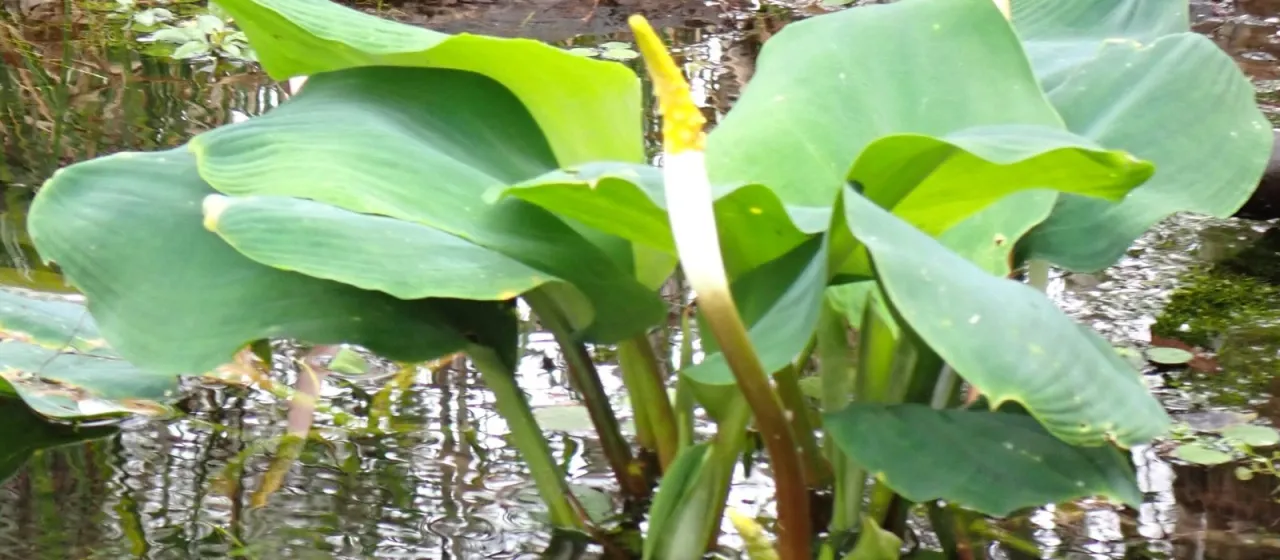
Golden club (Orontium aquaticum) is a distinctive perennial aquatic plant belonging to the Araceae family. It stands as the only living species within its genus, making it a unique botanical specimen. The plant is most recognized for its striking inflorescence—a spadix, lacking a spathe, which appears as a bright yellow, club-like structure emerging above the water surface.
Originating from North America, this plant is native to swamps, ponds, and slow-moving streams along the Atlantic and Gulf coastal plains. Its natural habitat includes environments with wet, muddy soils and varying water depths. The species has adapted to survive in regions with significant temperature fluctuations, which has facilitated its distribution in both natural wetlands and cultivated water gardens globally.
Botanically, the plant features blue-green leaves that are covered with a water-repellent wax, allowing them to remain dry even when floating on water. The leaves can be emergent or floating, depending on the depth of the water. The roots grow from a thick, fleshy rhizome that anchors firmly into the substrate. After pollination, the spadix produces green berries that mature and disperse into the water for germination.
Regarding its cultivation, Orontium aquaticum requires an aquatic environment with a water depth of 10 to 30 centimeters. It thrives in acidic or neutral, nutrient-rich silt or loam. While it prefers full sun exposure to promote blooming, it can tolerate partial shade. Proper maintenance involves ensuring the rhizome is buried securely in the soil to prevent it from floating away during currents or water level changes.
The primary horticultural application of the Golden club is the aesthetic enhancement of ponds, water gardens, and naturalized wetlands. It is highly valued for its early spring blooming period and low-maintenance requirements. Key management practices include periodic thinning of dense stands to maintain plant vigor. While generally resistant to common garden pests, young leaves can occasionally be targeted by waterfowl or aquatic insects, though these rarely threaten the survival of the established plant.