
Description
Orthoclada rariflora is a perennial grass belonging to the Poaceae family. It is a distinct botanical species naturally adapted to the humid, shaded environments of tropical forests in the Americas. Unlike many agricultural grasses that require full sunlight, this plant has evolved to thrive in the understory, where it forms loose tufts on the forest floor, playing a role in the local ecology of its native habitat.
The plant originates from the tropical regions of Central and South America. Its distribution is strictly linked to areas with high annual rainfall and consistent, warm temperatures. Orthoclada rariflora flourishes in soils rich in organic matter, typically found in areas where leaf litter accumulates and decomposes, providing a continuous supply of nutrients to its root system.
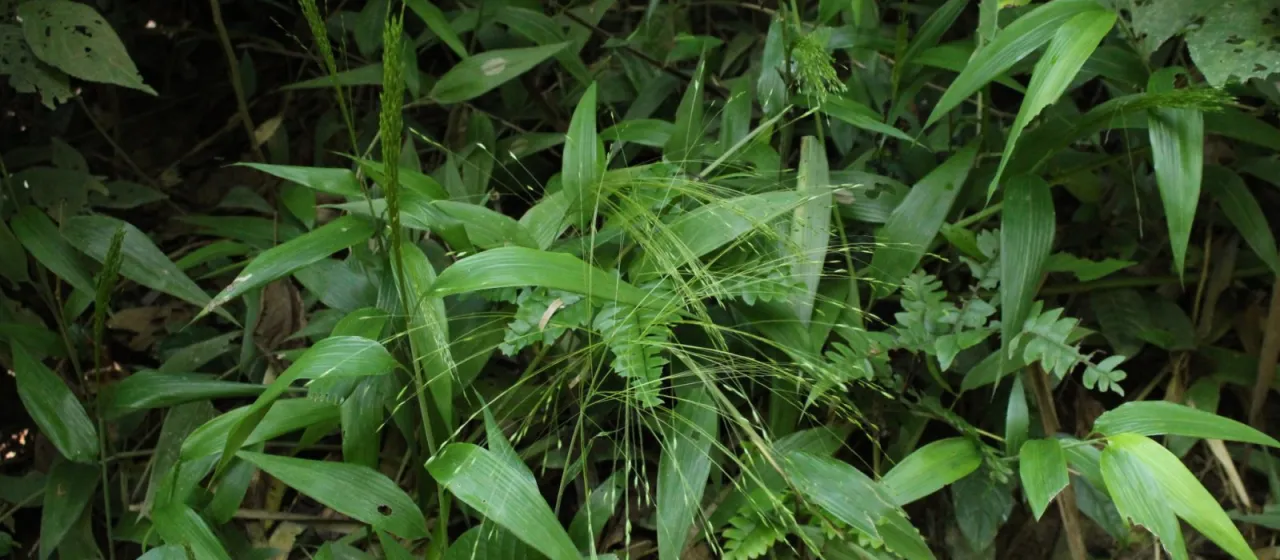
Botanically, Orthoclada rariflora is characterized by broad, lanceolate leaves, which is a departure from the typical linear leaf structure of many grasses. The stems are knotty and support loose, panicle-like inflorescences. The specific epithet rariflora refers to the sparse arrangement of its spikelets, which makes the reproductive structures appear delicate and widely spaced compared to denser grass varieties.
When considering agronomic practices, the cultivation of this species requires meticulous attention to environmental factors. It is an shade-loving plant that fails to thrive in direct sunlight. Optimal growth is achieved in controlled greenhouse conditions that mimic the jungle climate: high air humidity, temperatures ranging from 20°C to 30°C, and well-draining but moisture-retentive soil. Overwatering combined with poor ventilation must be avoided to prevent root rot.
The host of potential diseases for Orthoclada rariflora includes various fungal infections, such as mildew or leaf spots, primarily triggered by stagnant air and high humidity. In terms of economic use, while not a mainstream forage crop, it holds potential in the ornamental industry, specifically for shade-tolerant indoor or conservatory landscaping. Its biology makes it an excellent subject for research into understory plant physiology and the sustainable use of tropical grasses.