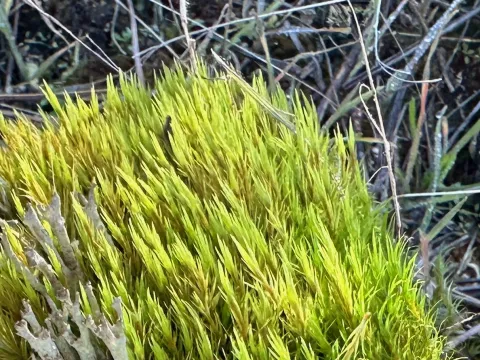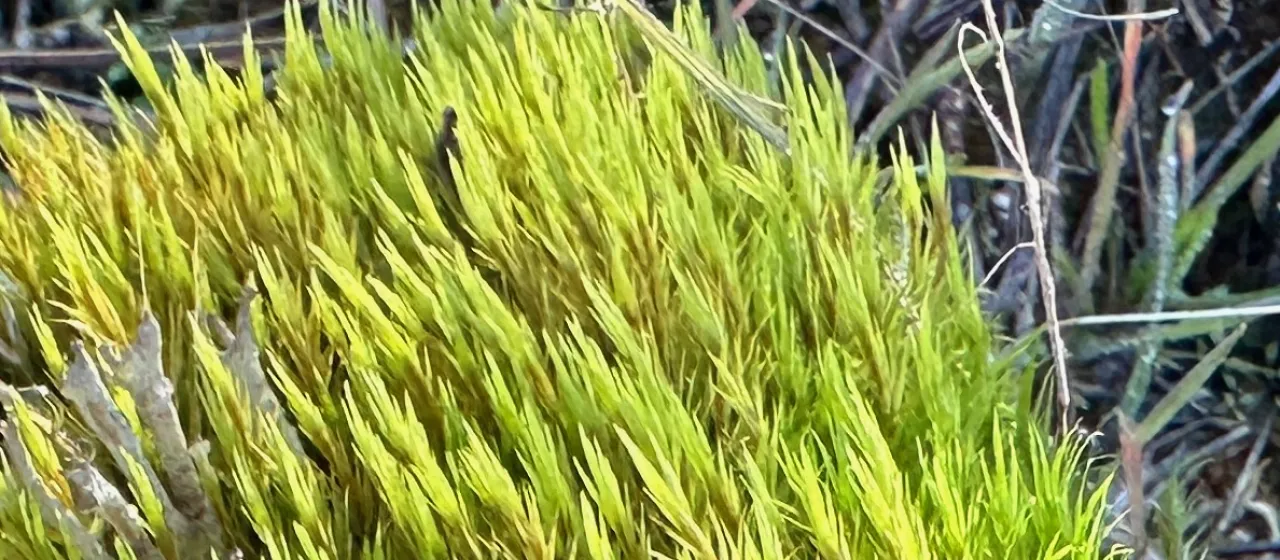
Description
Orthodicranum flagellare is a species of moss belonging to the Dicranaceae family. While not classified as a commercial agricultural crop, this bryophyte serves as a critical component of forest ecosystems, contributing to soil moisture retention and the decomposition of woody debris in woodland environments.
The distribution of this species spans vast regions across the Northern Hemisphere, including temperate zones in Europe, Asia, and North America. It is typically found growing on rotting logs, stumps, and the base of tree trunks, demonstrating a specialized preference for decayed organic substrates that remain moist throughout the growing season.
Botanically, the species is distinguished by its flagelliform (whip-like) brood branches, which facilitate asexual reproduction. The plants form dense, bright green to yellowish-green cushions. The leaves are narrow and subulate, an adaptation that allows the organism to survive in varying humidity levels common in sheltered forest habitats.
The environmental requirements for Orthodicranum flagellare center on high atmospheric humidity and shaded conditions. It is highly sensitive to desiccation and direct sunlight, making it a reliable indicator of stable microclimates within forest stands. Proper management of such areas involves protecting the forest canopy to maintain the necessary moisture levels for bryophyte health.
The utility of this moss is primarily ecological rather than agronomic. However, its characteristics make it a subject of interest for environmental restoration projects and native gardening. By providing a natural substrate cover, it assists in erosion control on a micro-scale and supports the diversity of micro-arthropods living within the moss layer.
Photo gallery