
Description
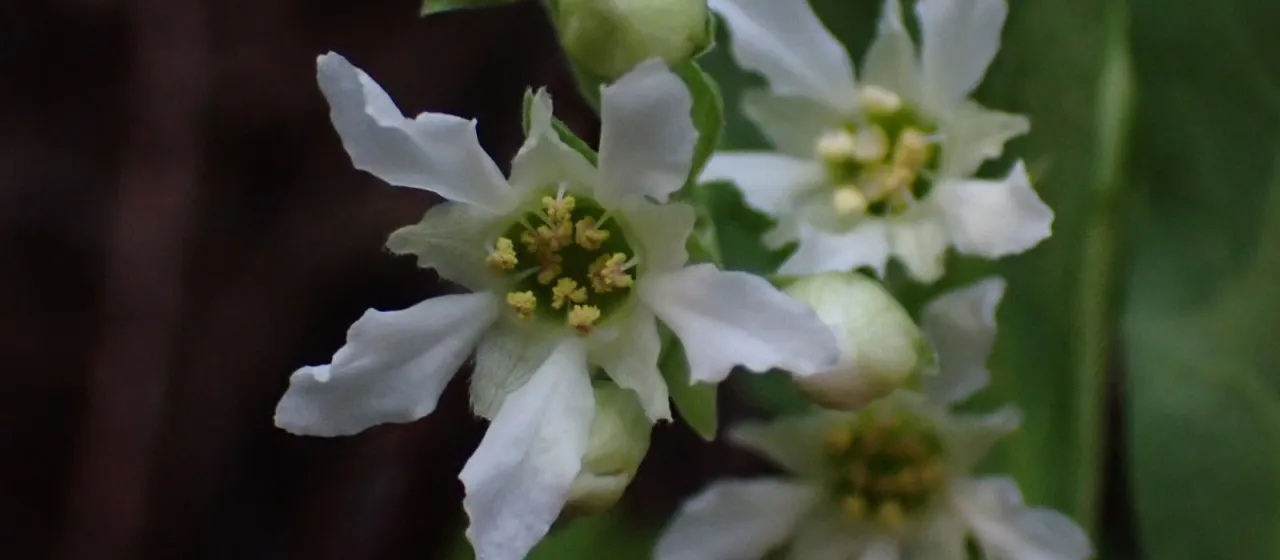
Osoberry (Osmaronia cerasiformis), commonly known as the Indian plum, is a distinct shrub belonging to the Rosaceae family. It is recognized as one of the earliest shrubs to bloom in the spring, often appearing in late winter or very early spring. The plant is native to the western regions of North America, where it typically thrives in wooded areas and stream banks.
Botanically, the plant is a deciduous shrub that can grow up to 5 meters in height. It is dioecious, meaning individual plants have either male or female flowers. The flowers are produced in drooping racemes that emit a sweet, almond-like fragrance. The foliage is lance-shaped and light green, providing a lush appearance during the growing season.
Regarding cultivation, Osoberry prefers well-drained, nutrient-rich soils with consistent moisture levels. While it is tolerant of shade, it produces the most profuse blooms when grown in partial sunlight. It is hardy in a range of temperate zones but should be protected from harsh, drying winds that can damage early flower buds.
Maintenance is relatively straightforward, involving light pruning to maintain shape and the removal of dead or crossing branches. Soil mulching is highly recommended to retain moisture and suppress weeds. The shrub is generally resistant to major pests, though it may occasionally be susceptible to scale insects or mild fungal infections if air circulation is poor.
Economically and ecologically, Osoberry serves as a vital component in landscape restoration and bird-friendly gardening. Its early nectar production is crucial for pollinators that emerge early in the season. Although the fruits are edible and were historically used by indigenous populations, they are primarily valued today for their role in biodiversity and ornamental landscape design.
- Early blooming indicator for spring gardens.
- Important ecological value for early-season pollinators.
- Adaptability to various forest and garden settings.