Description
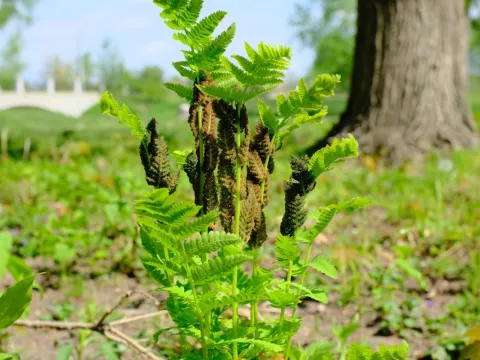
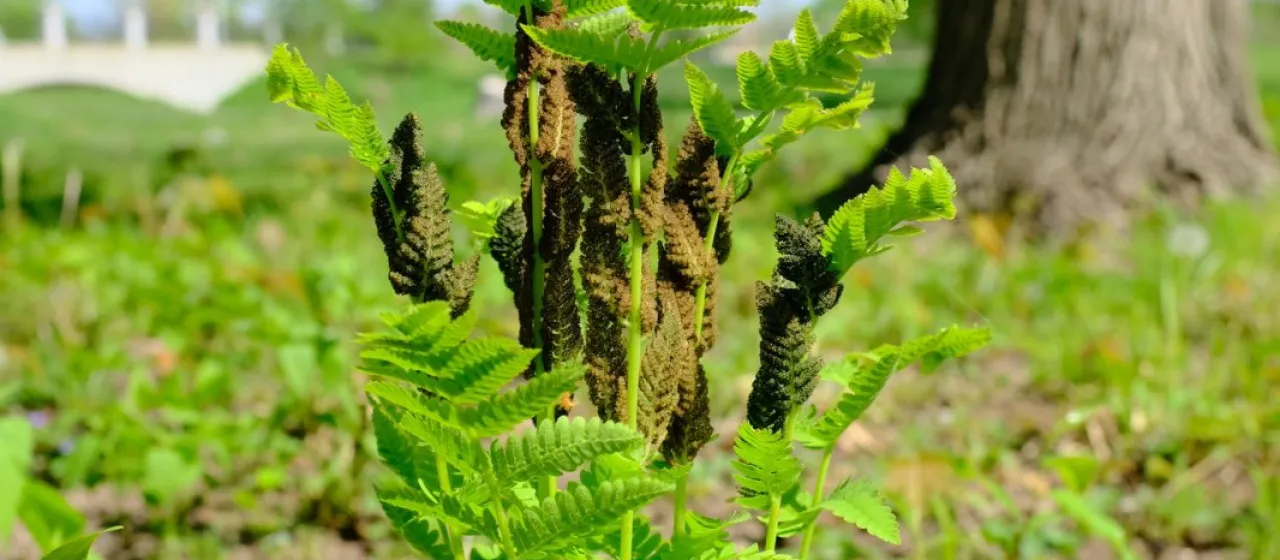
The Interrupted fern (Osmunda claytoniana) is a perennial species belonging to the Osmundaceae family. It earned its common name from the unique way its fertile leaflets are situated in the middle of the vegetative fronds, creating an appearance of an interrupted leaf blade.
Native to parts of North America and Eastern Asia, this fern thrives in woodland habitats. It is naturally found in shaded, moist environments such as damp forests, ravines, and the banks of streams, where it benefits from high organic matter content in the soil.
Botanically, it is characterized by tall, arching fronds that can grow up to 1 meter in height. The fertile pinnae appear in mid-summer, bearing spores, after which they wither away, while the sterile green leaflets persist through the growing season until the onset of autumn.
To cultivate Osmunda claytoniana successfully, growers must emulate its natural woodland habitat. Key agricultural requirements include:
- Partial to full shade exposure throughout the day.
- Consistently moist, acidic or neutral soil rich in organic matter.
- Good soil structure to ensure drainage while retaining water.
- Mulching to keep the root zone cool and hydrated.
In terms of usage, the Interrupted fern is highly valued in ornamental landscaping for its structural elegance and hardiness. It is a reliable plant for moisture-retentive shade gardens. It is generally resistant to most pests and diseases, although gardeners should ensure the soil does not become stagnant to prevent root rot issues.
Photo gallery