Description
Broad-leaved woodsorrel (lat. Oxalis latifolia) is a perennial herbaceous plant belonging to the Oxalidaceae family. In agricultural and horticultural contexts, it is widely recognized as a highly persistent and invasive weed that competes aggressively with crops for water, nutrients, and sunlight, often rendering infested areas difficult to cultivate.
Originally native to Central and South America, this species has spread globally to various temperate and tropical regions. It has become a significant problem in many agricultural systems worldwide, thriving in fertile, well-drained soils found in vegetable gardens, orchards, and intensive crop production fields where it establishes dense colonies.
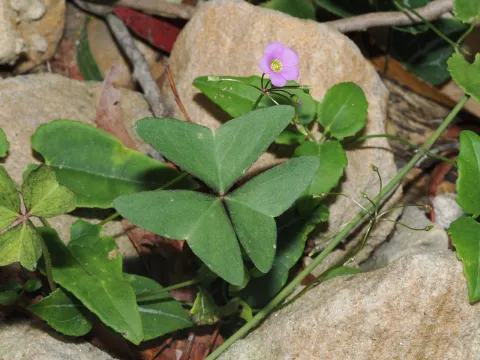
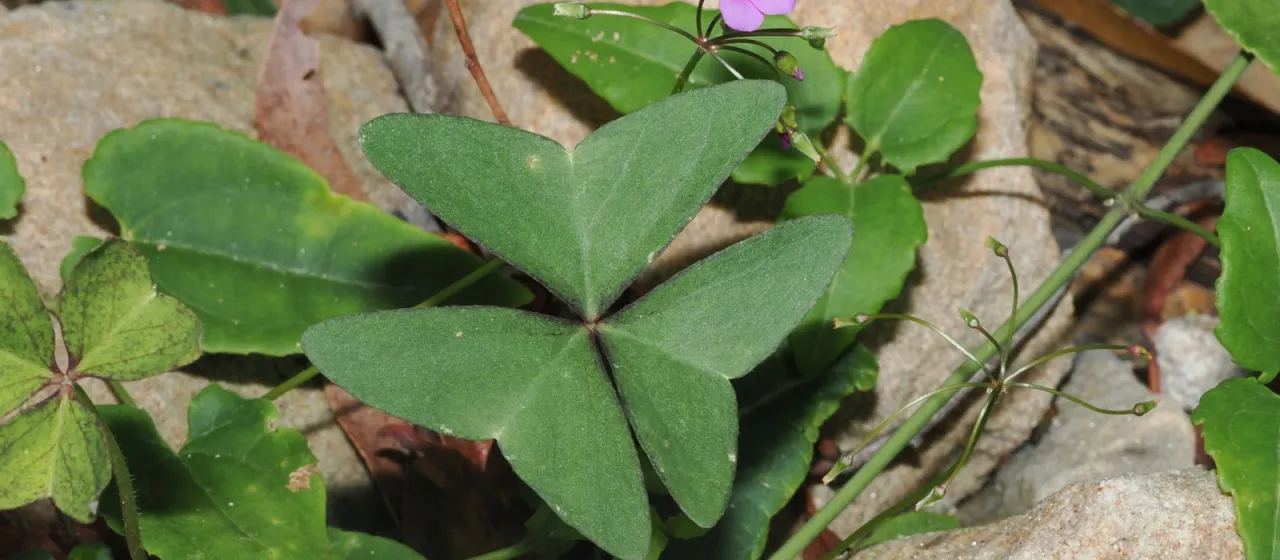
The botanical structure of the plant is defined by its bulbous root system. It lacks an aerial stem, with foliage and flowers emerging directly from underground bulbs. The leaves are typically trifoliate with broad, heart-shaped leaflets. Reproduction occurs both through seeds and, more dominantly, through the production of numerous small bulblets, which are easily spread during soil tillage and cultivation practices.
Regarding cultivation and management requirements, the plant is highly adaptable to various soil types but prefers moisture and moderate temperatures. In a farming context, control is notoriously difficult. Mechanical weeding often exacerbates the problem by dispersing the bulblets throughout the field. Consequently, integrated weed management strategies, including the use of systemic herbicides and soil solarization, are required to manage its population effectively.
Broad-leaved woodsorrel has no productive agricultural use; it is strictly categorized as a weed. While it can be affected by common fungal pathogens such as rust, these diseases rarely impact the plant enough to serve as a biological control agent. Effective management focuses on sanitation, early detection of initial infestations, and diligent chemical control to prevent the establishment of the deep bulb bank in the soil.
- Propagation via underground bulblets.
- Highly invasive perennial habit.
- Trifoliate leaves with broad segments.
- High tolerance to standard mechanical weeding.
- Resilience in diverse climate conditions.
Photo gallery