Description
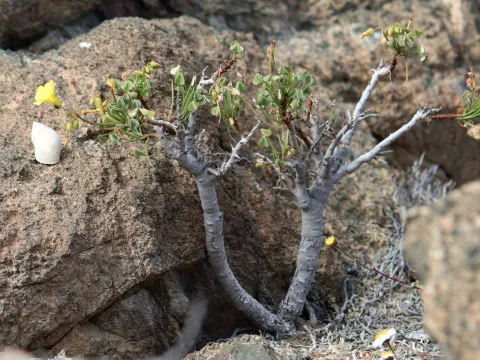
Oxalis megalorrhiza is a distinct species of perennial herb belonging to the Oxalidaceae family. Unlike common wood sorrel species, this plant exhibits significant succulent characteristics, allowing it to thrive in arid environments that would be unsuitable for most other herbaceous plants.
Originating from the coastal regions of Peru and Chile, this plant is well-adapted to harsh, rocky environments. Its natural habitat is characterized by low rainfall and high solar radiation, which has shaped its morphology to favor water storage and efficient resource utilization throughout its growth cycle.
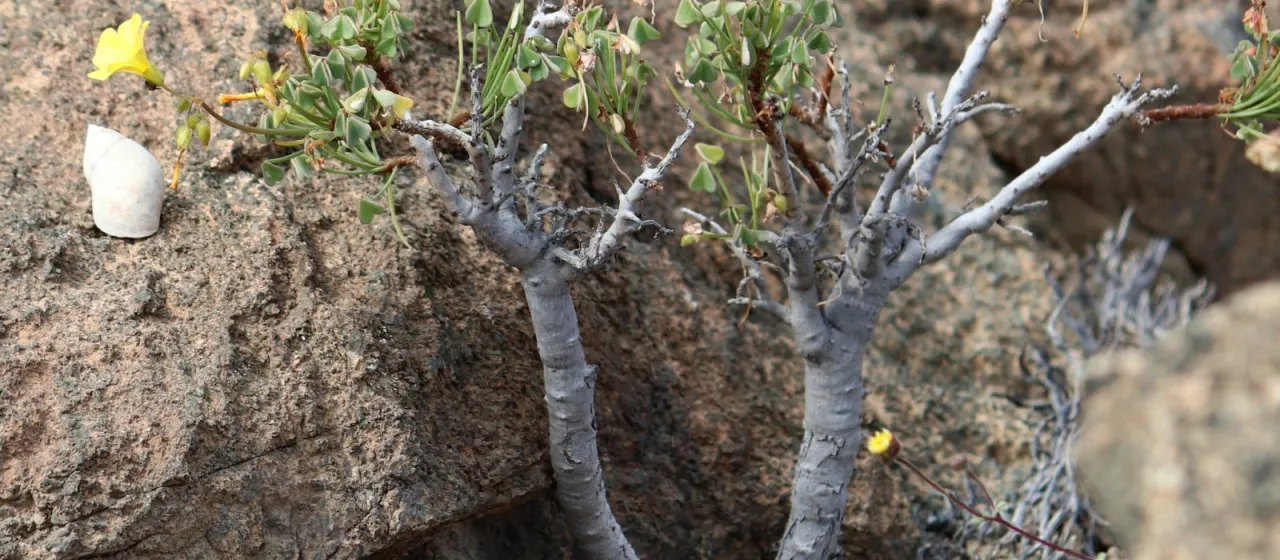
The botanical structure of the plant features fleshy, sometimes woody-based stems and thickened leaves that serve as water reservoirs. The root system is robust and adapted to penetrate compacted or rocky soil. The plant produces elegant, typically five-petaled flowers, which contrast beautifully with the succulent foliage.
Regarding agrotechnical requirements, Oxalis megalorrhiza demands a highly porous and well-draining growing medium, such as a mix of cactus soil and coarse grit. It requires bright, direct sunlight to maintain its compact growth form. Overwatering must be strictly avoided, as the plant is highly susceptible to root rot in waterlogged conditions.
The primary use of this crop is in ornamental horticulture, specifically for succulent enthusiasts and collectors. Common challenges include managing moisture levels to prevent fungal infections and monitoring for pests like mealybugs, which tend to hide in the joints of the succulent stems. Proper air circulation is vital for plant health.
- Use a gritty, fast-draining substrate mix.
- Place in a spot with high sunlight intensity.
- Water sparingly, especially during the dormant phase.
- Monitor regularly for sap-sucking insects.
Photo gallery