Description
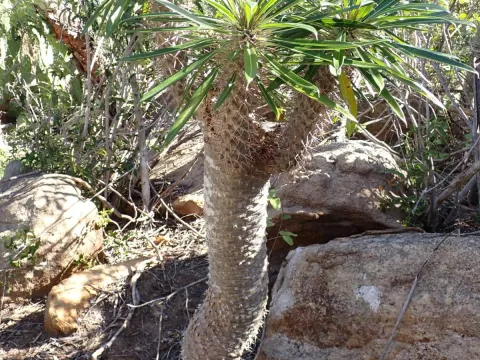
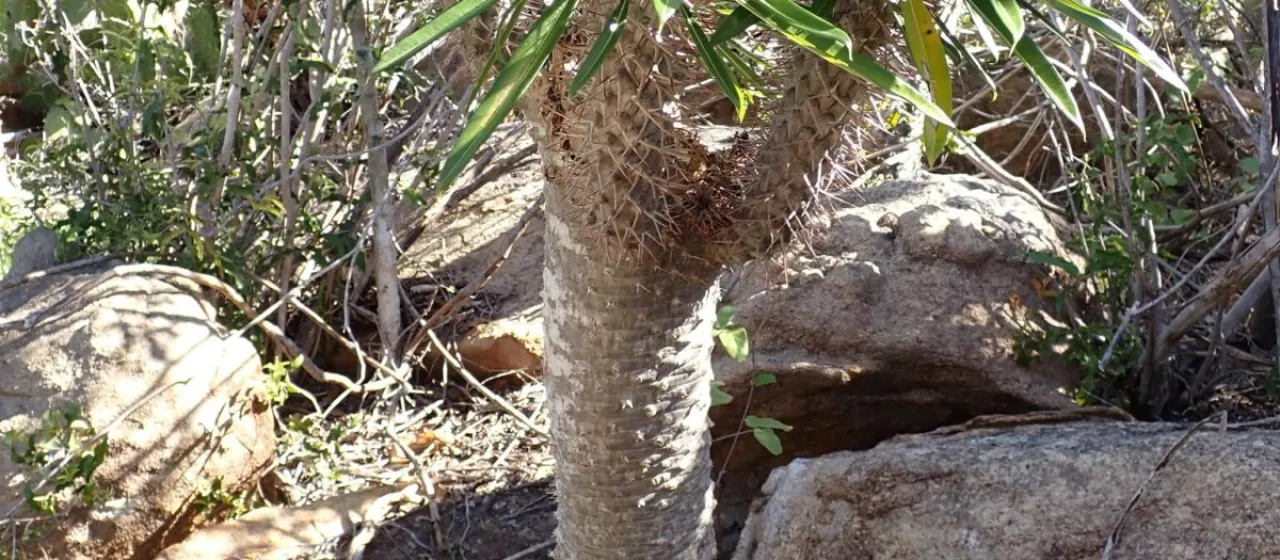
Pachypodium lamerei, commonly known as the Madagascar palm, is a striking succulent belonging to the Apocynaceae family. Despite its common name, it is not a palm but a pachycaul succulent characterized by a thick, thorny trunk used for water storage. This anatomical adaptation allows the plant to survive in the arid environments of its native Madagascar.
The native habitat of this species is characterized by rocky terrains and tropical dry forests. Because of these origins, the plant has developed specific physiological needs, primarily requiring high light intensity and a well-drained substrate to prevent root asphyxiation. Understanding its xerophytic nature is critical for successful cultivation in both greenhouse and indoor environments.
Botanically, the plant features a succulent stem covered with clusters of sharp spines, with a rosette of leathery, dark green leaves appearing at the apex during the growing season. If given sufficient light and appropriate maturation, the plant produces large, fragrant, white flowers. It is a slow-growing species, making it a popular choice for long-term ornamental projects and succulent collections.
Agronomic management requires a porous, well-draining soil mix that mimics the gritty conditions of its natural environment. Watering must be disciplined: the soil should dry out completely between sessions. During the winter dormancy phase, the plant requires significantly reduced water and protection from temperatures below 15°C to avoid tissue damage and fungal infections caused by high moisture levels.
- Soil: A mix of cactus compost, coarse sand, and volcanic rock.
- Light: Full sun is necessary for healthy development.
- Watering: Sparse, strictly after full substrate desiccation.
- Fertilization: Low-nitrogen fertilizer during the peak growing season.
Pests such as spider mites, mealybugs, and scale insects are the primary threats to the health of the plant. These pests thrive in dry air, so maintaining proper airflow and routine inspections are essential for prevention. If an infestation occurs, targeted use of systemic insecticides or manual removal with alcohol-soaked tools is recommended to preserve the integrity of the plant's succulent tissues.
Photo gallery