Description
Balsam ragwort (Packera paupercula) is a perennial herbaceous plant belonging to the Asteraceae family. Historically classified under the genus Senecio, it has been reclassified into the Packera genus based on phylogenetic studies. This plant is a significant member of North American native flora, frequently found in various habitats ranging from woodlands to open rocky outcrops.
The native range of Packera paupercula spans across large portions of Canada and the northern United States. It exhibits a high degree of environmental adaptability, thriving in diverse conditions such as limestone barrens, moist prairies, and gravelly slopes. Its ability to colonize nutrient-poor or disturbed soils makes it an ecologically important species for land restoration projects.
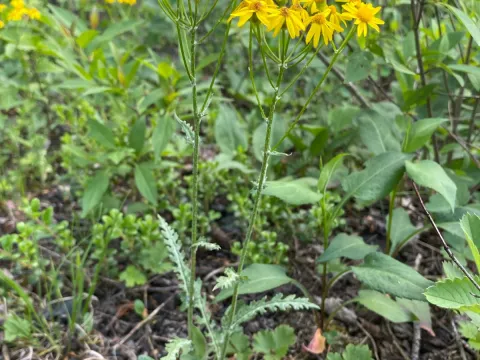
Botanically, the plant is characterized by a basal rosette of leaves and slender stems reaching heights between 30 and 60 centimeters. The inflorescences consist of small, bright yellow flower heads typical of the daisy family. The plant follows a cycle of spring to early summer blooming, followed by the production of wind-dispersed seeds, ensuring effective propagation in its native environment.
Cultivation requirements for Balsam ragwort center on full sun exposure and well-draining soil conditions. It is notably cold-hardy, surviving severe winter temperatures without special protection. While it is not a traditional field crop, those interested in cultivating it should ensure the soil is not overly dense or waterlogged, as poor drainage is the primary cause of decline in managed settings.
- Prefers full sun to partial shade.
- Thrives in neutral to slightly alkaline pH soils.
- Requires minimal fertilization.
- Excellent for native plant landscaping and erosion control.
In terms of agricultural and horticultural use, Balsam ragwort is valued primarily for its ecological contribution and aesthetic appeal in wild gardens. Common pests include aphids, which may cluster on developing flower buds, and occasional susceptibility to powdery mildew in high-humidity areas. Proper spacing and airflow are sufficient to mitigate most common plant health issues without heavy reliance on chemical interventions.
Photo gallery