Description
Pandorina (Pandorina morum) is a genus of freshwater colonial green algae belonging to the Volvocaceae family. While not a conventional crop plant, it serves as a critical biological component in aquatic ecology and serves as a natural food source in commercial aquaculture ponds.
The organism is found globally in a wide variety of freshwater habitats, including ponds, lakes, and drainage ditches. Pandorina morum is highly adaptable to various climatic conditions, provided there is enough standing water and organic matter to support its rapid growth cycle through binary fission within its colony structure.
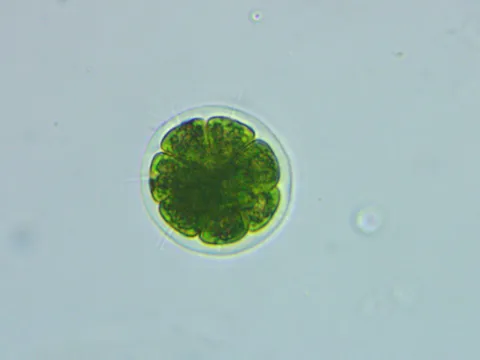
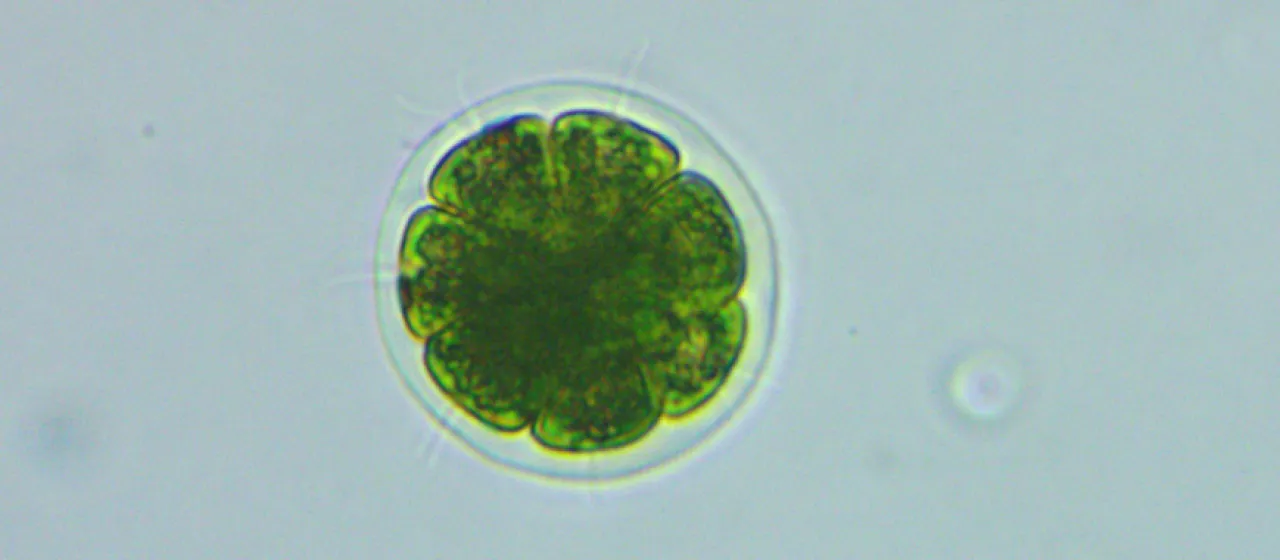
Botanically, Pandorina morum consists of a colony containing 8, 16, or 32 cells arranged in a spherical shape, encased within a protective mucilaginous matrix. Each individual cell features two flagella that allow the colony to move effectively through the water column, utilizing light-sensitive eyespots to move toward optimal light intensity for photosynthesis.
Requirements for growth center on moderate water temperatures and high nutrient concentrations, particularly nitrogen and phosphorus. In management contexts for artificial reservoirs, professionals monitor the growth of these colonies, as excessive blooming may require adjustments to the pond's nutrient loading to maintain water quality for fish or other aquatic livestock.
The primary agricultural use of Pandorina relates to its role in the trophic chain. It provides an essential food source for various zooplankton species, which are foundational for sustaining healthy fish populations in aquaculture. Typical threats include predation by micro-crustaceans and infection by parasitic chytrid fungi, which can significantly reduce population density under unstable water conditions.
- Phylum: Chlorophyta
- Family: Volvocaceae
- Structure: Colonial coenobium
- Locomotion: Flagellated
- Habitat: Freshwater environments
Photo gallery