Description
Short-leaf panicgrass (Latin: Panicum brevifolium) is an annual grass species belonging to the family Poaceae. While it is not a major global commodity crop, it serves as a significant localized forage resource in various tropical regions of Asia and Africa, where it thrives in humid environments.
The plant originates from the tropical zones of Southern and Southeastern Asia. Its natural habitat includes forest edges, shaded woodlands, and moist disturbed areas. Unlike many other panicgrass species that prefer full sun, this variety shows adaptation to semi-shaded conditions, making it unique among its relatives.
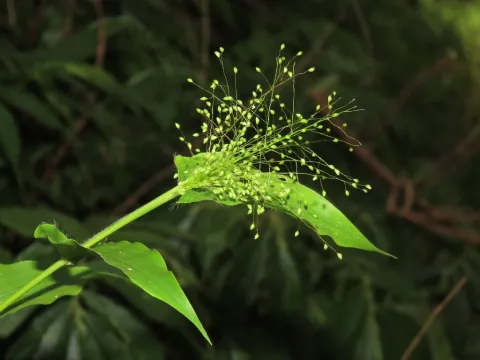
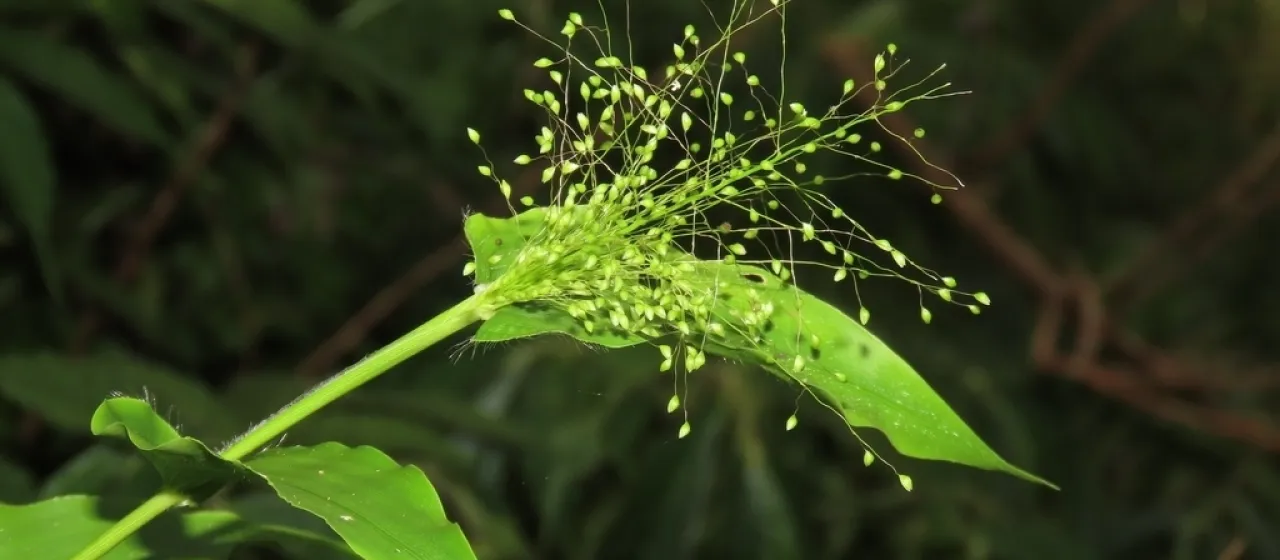
Botanically, it is identified by its distinctively short and broad leaves compared to other Panicum species. The culms are usually decumbent or ascending, often rooting at the lower nodes if they come into contact with moist soil. The inflorescence is a delicate, spreading panicle bearing small seeds that are typical for the genus.
Agronomically, the crop requires high soil moisture and rich, loamy substrates to reach maximum biomass potential. It is sensitive to drought and frost, which limits its cultivation to tropical and subtropical climates with consistent rainfall. Successful cultivation relies on early weeding to ensure the young plants are not outcompeted by aggressive tropical weeds.
The primary use of this grass is as fodder for livestock due to its palatable vegetative tissue. However, it can also play a role in soil conservation programs, particularly in erosion control for shaded sloped lands. The main challenges for producers include:
- Management of fungal leaf spot pathogens in high humidity.
- Control of local lepidopteran larvae and sap-sucking insects.
- Ensuring timely harvesting before seed shattering occurs.
Photo gallery