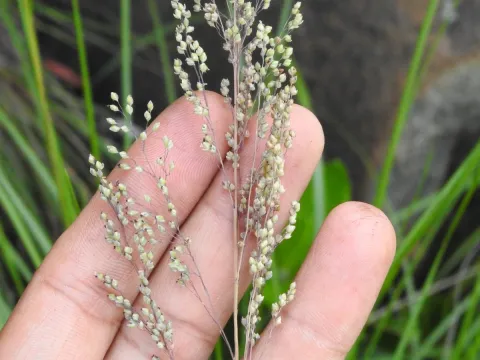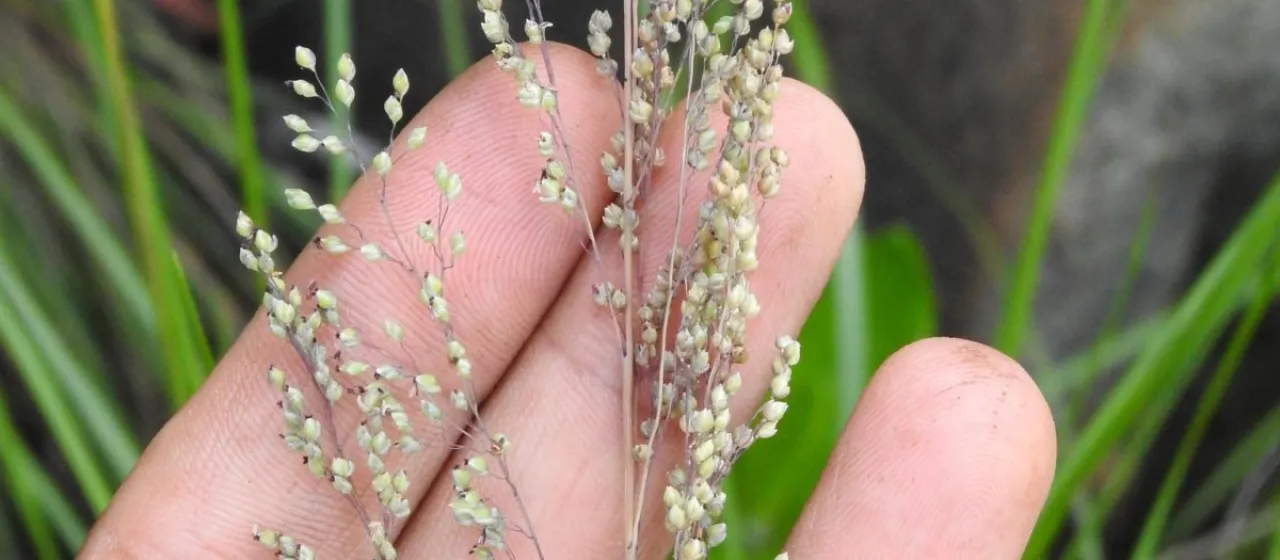
Description
Natal panicgrass (lat. Panicum natalense) is a perennial grass species belonging to the Poaceae family. Recognized for its resilience, it is often studied for its ability to persist in challenging environments, distinguishing itself from annual panicum varieties used in traditional agriculture.
The origin of this species is linked to the southern regions of Africa, where it has evolved to thrive in diverse ecological niches. Its natural range encompasses grasslands and savannah areas, demonstrating strong adaptation to fluctuating rainfall patterns and periodic drought.
Botanically, Panicum natalense is characterized by its tufted growth habit and stiff, narrow leaves. The root system is deep and fibrous, which helps the plant stabilize the soil and extract moisture from lower soil horizons during the dry season, ensuring its year-round survival.
Regarding cultivation, this grass prefers well-drained soils and full sun exposure. Good agronomic practice involves managing the grazing intensity to prevent overgrazing, which allows the plant to maintain its structural integrity and replenish its carbohydrate reserves in the roots.
The primary agricultural use is as a hardy forage crop. Livestock producers value it for its ability to provide stable biomass for grazing. Furthermore, because it is generally resistant to local pests, it requires minimal chemical intervention, making it an efficient crop for sustainable management.
- Drought tolerance
- Deep root architecture
- Excellent pasture persistence
- Low management requirements
Photo gallery