Description
Panicum paludivagum is a perennial herbaceous plant belonging to the grass family (Poaceae). This species is a member of the genus Panicum and is uniquely adapted to waterlogged conditions, distinguishing it from most other members of the genus. It is scientifically classified as a semi-aquatic grass capable of colonizing shallow waters and riparian zones.
The native range of this species is primarily centered in the tropical and subtropical regions of the Americas, specifically throughout Central and South America. The plant prefers moist habitats, including riverbanks, floodplains, and marshy terrain. Owing to its ecological plasticity, it thrives and competes effectively with other coastal species under specific microclimatic conditions.
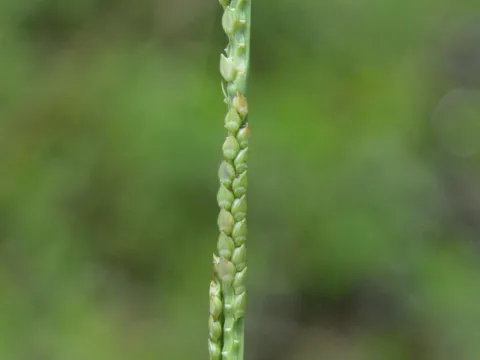
Botanically, Panicum paludivagum is characterized by a strong root system and stems that can grow to a considerable height. The leaf blades are generally narrow, lanceolate, and often covered with fine trichomes. The inflorescence is a typical open panicle that holds numerous small grains, providing a crucial food source for local wildlife and waterfowl in its native habitat.
Agricultural requirements for this grass focus on the availability of a stable water source and nutrient-rich, often silty soils. The plant demonstrates exceptional resilience to prolonged flooding, making it a viable candidate for land reclamation projects and shoreline stabilization efforts. However, in an intensive agricultural context, careful management is required to prevent it from becoming overly invasive.
The economic utility of this crop is specialized, primarily serving as a potential forage source for livestock in wetlands and as a component for ecosystem restoration. While its diseases and pests have not been extensively documented, it is susceptible to typical grass pathogens such as rust or smut fungi, particularly in environments with high humidity and poor air circulation.
- Family: Poaceae.
- Plant type: Perennial grass.
- Habitat: Aquatic and semi-aquatic ecosystems.
- Main regions: Tropical America.
- Usage: Forage, soil conservation.
Photo gallery