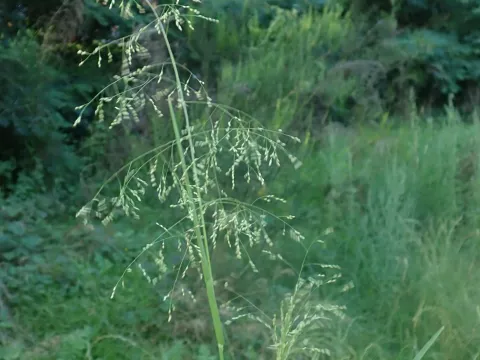
Description
Schinz's panicgrass (Panicum schinzii) is an annual grass species belonging to the Poaceae family. Recognized for its significant biomass production potential, this crop is utilized in agricultural systems as a reliable source of green forage. The plant is characterized by a vigorous growth habit and a strong root system, which provides structural stability and resilience in various soil conditions.
Native to Africa, this species has naturalized in several other regions globally, particularly in areas where wetlands or floodplains offer the necessary moisture. Its ability to tolerate periodic saturation makes it an excellent choice for marginal agricultural lands that may experience seasonal flooding, where traditional cereal crops might fail due to root rot or lack of oxygen.
From a botanical perspective, the plant features erect, slender stems and linear leaves with distinct leaf sheaths. The inflorescence is an open, spreading panicle containing numerous small spikelets. These spikelets are crucial for propagation, as the plant reproduces via seeds. The development cycle is closely synchronized with rainfall and temperature patterns, highlighting its nature as a thermophilic plant.
Cultivation requirements involve selecting sites with adequate moisture retention and nutrient availability. While the plant is hardy, it benefits significantly from nitrogen fertilization during the vegetative phase. Weed management in the early stages is essential, as seedlings grow slowly until they establish a strong root system. Proper spacing ensures adequate air circulation, reducing the risk of fungal infections.
Economically, Schinz's panicgrass is primarily grown for livestock feed. It can be harvested for hay or grazed directly, providing a high-quality nutritional profile for ruminants. It is relatively resistant to major pests, though it should be monitored for common grass-feeding insects. Its versatility makes it a valuable asset for farmers looking to diversify their forage base in subtropical or tropical climates.
- Adaptability to wet soil conditions.
- Excellent biomass yield potential.
- Good nutritional value for livestock.
- Resilience against common agricultural diseases.
Photo gallery