Description
Scribner's panicgrass (Panicum scribnerianum) is a perennial grass species belonging to the Poaceae family. As a native component of North American prairies, this plant has adapted to survive in diverse environmental conditions. It is increasingly recognized in ecological restoration and sustainable forage management for its resilience and ability to thrive in poor soils.
The plant originates from the central and eastern regions of North America, where it is found in prairies, open woodlands, and rocky slopes. Its natural range demonstrates a strong capacity for colonization in open habitats. The species is well-adapted to the climatic patterns of these regions, showing notable tolerance for heat and periodic moisture deficits during the summer months.
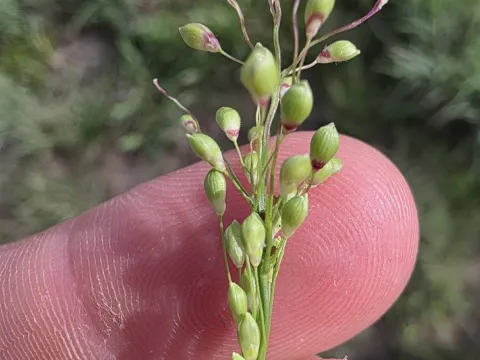
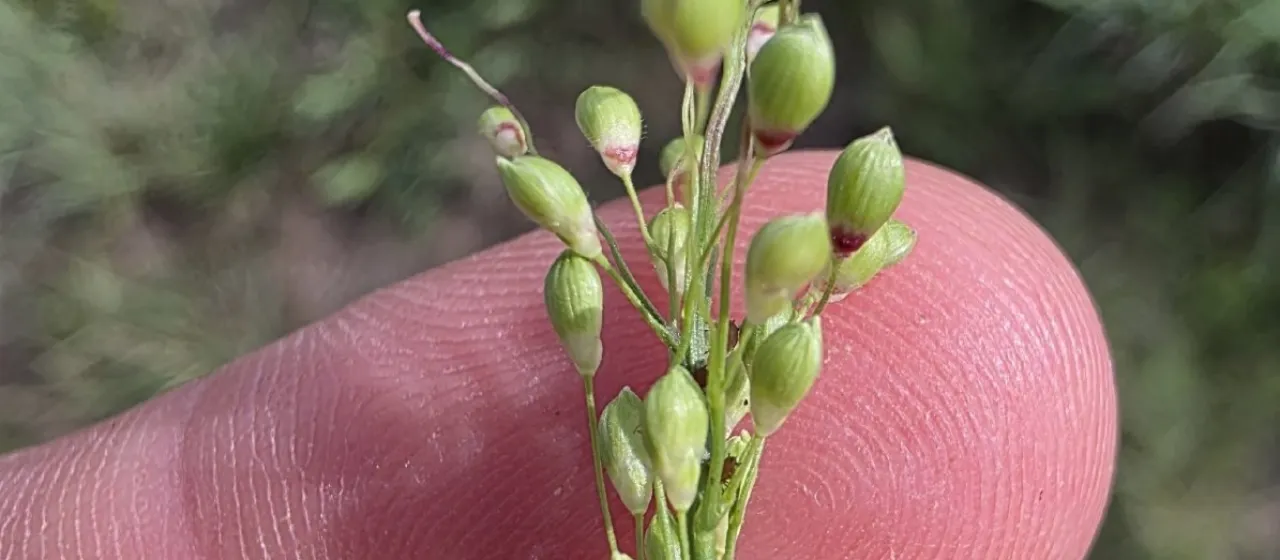
Botanically, Scribner's panicgrass develops in compact clumps with erect culms ranging from 20 to 60 cm in height. Its leaves are typically narrow, often displaying a degree of pubescence that helps in moisture retention. The inflorescence is a distinct panicle that produces small, wind-dispersed seeds, facilitating the plant's spread across diverse landscapes during the reproductive phase.
Requirements for cultivation include well-drained soils, often sandy or rocky in texture. The species is highly undemanding regarding nutrient input, as it is evolved to survive in naturally nutrient-deficient prairie conditions. Adequate sunlight is the most critical factor for healthy growth, as the plant does not tolerate shading by taller, more aggressive vegetation species.
Agricultural and ecological uses are primarily focused on forage improvement and soil stabilization. It provides high-quality forage for livestock during its early growth stages. While generally robust, the plant can be susceptible to typical grass pathogens such as rust fungi in excessively humid environments, but it remains a hardy and valuable component of native grassland ecosystems.
- Family: Poaceae
- Life cycle: Perennial
- Soil preference: Well-drained, sandy/rocky
- Key advantage: Drought tolerance
- Applications: Forage, conservation seed mixes
Photo gallery