Description
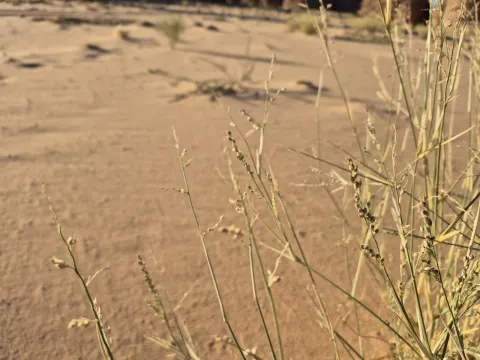
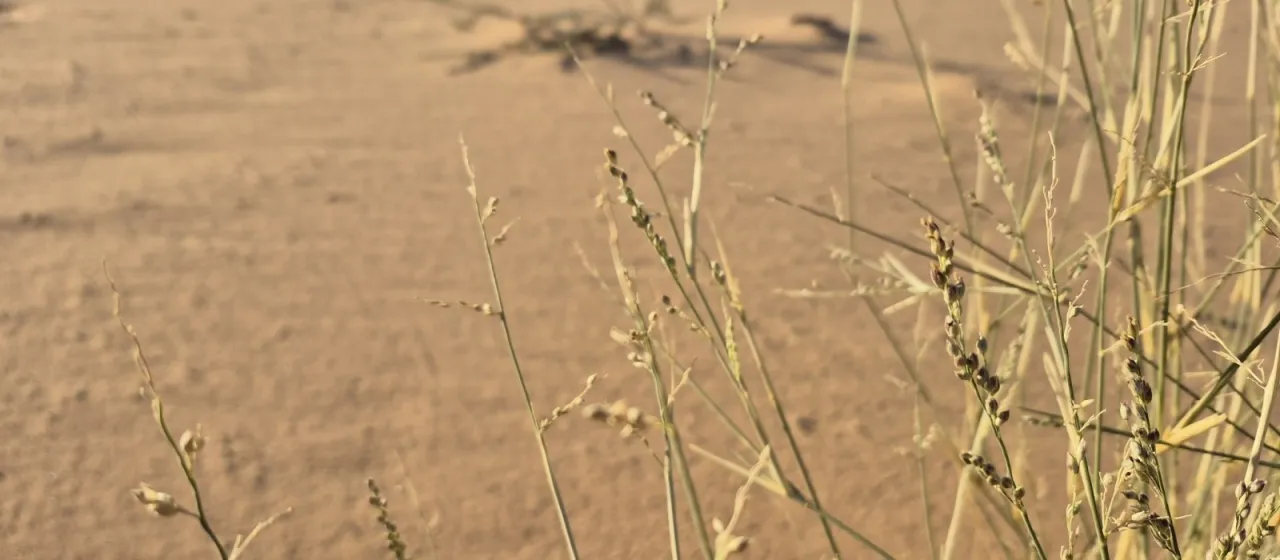
Desert panic grass (lat. Panicum turgidum) is a perennial herbaceous plant belonging to the grass family (Poaceae). It is a vital forage crop known for its exceptional resilience in arid environments, maintaining its nutritional value even under prolonged drought conditions.
The native range of this species covers parts of North Africa, the Middle East, and South Asia. It is a dominant component of desert and semi-desert ecosystems, flourishing in sandy soils and rocky substrates. This adaptation allows the plant to thrive in regions where annual precipitation is extremely low and temperatures often exceed optimal levels for other crops.
Botanically, this grass forms dense, stiff, and shrub-like clumps. The plant is named for its swollen nodes, which provide structural support. It possesses an extensive and deep root system that enables it to access subsoil moisture, which is a key survival strategy in extreme desert climates. The leaves are narrow, linear, and often covered with a protective waxy cuticle to minimize transpiration.
Agricultural management of Panicum turgidum focuses on rangeland restoration. It is remarkably undemanding, requiring no irrigation or chemical fertilizers, which makes it a sustainable choice for extensive livestock production in arid zones. Propagation can occur through seed dispersal or vegetative division, and the plant establishes itself well on disturbed soils where other vegetation fails to grow.
The primary economic value lies in its use as forage for camels, sheep, and goats. Because it is highly palatable and nutritionally dense, it is a crucial resource for pastoral communities. Furthermore, its ability to act as a soil binder makes it an excellent candidate for environmental protection projects aimed at controlling sand dune movement and preventing desertification.
- Outstanding drought and salinity tolerance
- Effective sand dune stabilization and soil conservation
- High nutritional value for arid-zone livestock
- Low-input cultivation requirements
Photo gallery