Description
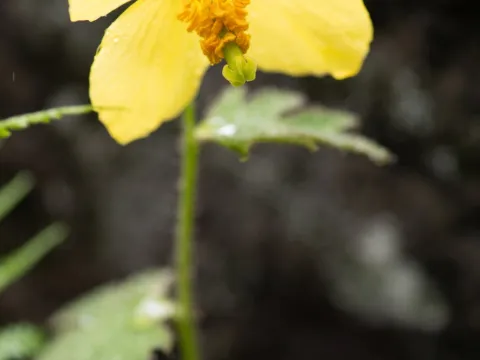
Meconopsis integrifolia (syn. Papaver cathcartia) is a stunning perennial herbaceous plant belonging to the Poppy family (Papaveraceae). Known commonly as the yellow Himalayan poppy, it is prized for its large, bowl-shaped flowers that bloom in a vibrant yellow hue. Due to its classification history, it remains a fascinating subject for both botanists and horticultural enthusiasts.
The plant originates from the high-altitude mountain regions of the Himalayas, Western China, and Tibet. These natural habitats provide a cool, moist environment with well-drained alpine soil. Cultivating this species requires mimicking these specific environmental conditions, as the plant is highly sensitive to heat and drought, which can quickly lead to its decline in lowland gardens.
Botanically, the plant features a rosette of lance-shaped leaves covered in fine hairs that help retain moisture. The central stem can grow up to 90 centimeters in height, bearing spectacular flowers that can reach 20 centimeters in diameter. After the flowering period, the plant produces elongated capsules containing numerous tiny seeds, which are the primary means of propagation for this species.
Agronomic requirements are centered on soil structure and temperature management. The ideal soil for this crop is a light, humus-rich loam with excellent drainage properties and a slightly acidic to neutral pH. Growers should prioritize:
- Placement in partial shade to avoid direct intense sunlight.
- Regular moisture levels, avoiding both drought and waterlogging.
- Cold stratification of seeds for approximately 4-6 weeks before sowing.
- Avoidance of root disturbance during transplanting.
In terms of practical usage, this species is strictly ornamental, serving as a flagship plant for alpine gardens and specialized collections. Despite its beauty, it is susceptible to pests such as aphids and diseases like powdery mildew, particularly in poorly ventilated greenhouse conditions. Consistent monitoring and preventive measures are essential for successfully maintaining the health and vigor of this delicate ornamental crop.
Photo gallery