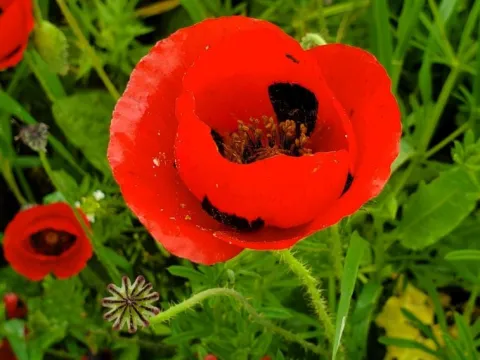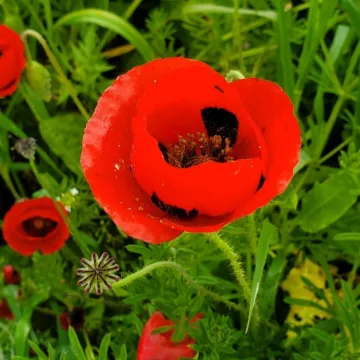

Pear-shaped poppy
Papaver subpiriforme
Description
Pear-shaped poppy (Papaver subpiriforme) is an annual herbaceous plant belonging to the Papaveraceae family. It is a distinct species noted for its morphological traits, specifically the unique pear-like shape of its seed capsules. This plant is a close botanical relative of other Papaver species often cultivated for both their culinary seeds and oil content.
The native range of Papaver subpiriforme is primarily found in the regions of the Caucasus and Western Asia. Throughout history, it has adapted to mountain and foothill ecosystems, thriving in climates where there is significant solar radiation and moderate precipitation levels. This adaptation makes it a robust species within its specific environmental niche.
Botanically, the plant features a taproot system and an erect stem covered with a glaucous bloom. Its leaves are pinnately lobed, and it produces large, showy flowers with delicate petals. The fruit is a capsule that opens via small pores beneath the stigmatic disc, releasing seeds upon maturity. These seeds are a rich source of essential fatty acids, making the species agriculturally significant.
The agronomy of this crop requires well-drained, fertile soil, ideally with a neutral pH. It is particularly sensitive to waterlogging, which can cause root rot, therefore site selection is paramount. Proper soil preparation, including deep plowing and fine harrowing, is necessary to ensure the small seeds achieve good soil-to-seed contact during planting.
- Regular weeding is essential during the rosette stage to prevent competition.
- Monitoring for common pests like the poppy weevil is critical for yield protection.
- Balanced fertilization is needed to support vigorous growth and seed development.
- Harvesting should occur when capsules are dry to maximize seed quality.
In terms of economic utility, Papaver subpiriforme is primarily grown for its seeds, which are utilized in the food industry for baking and the production of edible oils. Beyond culinary applications, the plant is studied for its chemical composition, as it contains various alkaloids that can be of interest to the pharmaceutical sector, provided that production is managed under strict agricultural and regulatory standards.
Photo gallery