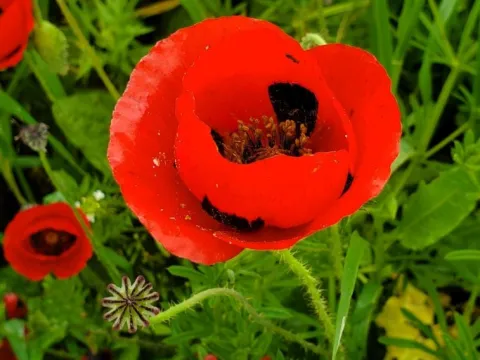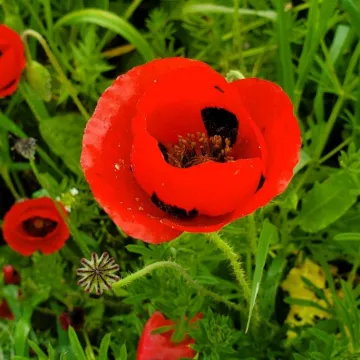

Umbonate poppy
Papaver umbonatum
Description
Papaver umbonatum, commonly known as the umbonate poppy, is an annual herbaceous plant classified within the Papaveraceae family. Known for its distinct morphological features, this species has gained attention in agricultural circles as a potential specialty crop. It is valued for its unique growth cycle and the chemical composition of its seeds, which are suitable for various industrial and culinary applications.
The plant originates from the arid and semi-arid regions of Central and Western Asia. Throughout its evolutionary history, it has adapted to environments characterized by intense solar radiation and periodic water scarcity. Currently, its cultivation is concentrated in regions that can replicate these semi-desert climatic conditions, ensuring a stable harvest during the dry summer months.
Botanically, the species is defined by its erect stems and characteristic pinnately lobed foliage. The most notable feature is the umbonate structure atop the seed capsule, which serves as a definitive identifier for the species. The plant typically reaches a height of 50 to 70 centimeters and possesses a deep taproot, allowing it to access groundwater during periods of drought.
Agrotechnical management requires precise soil preparation, focusing on well-drained, sandy-loam environments. It is essential to maintain a neutral soil reaction, as extreme acidity or alkalinity can inhibit nutrient uptake. Farmers are advised to provide adequate spacing during sowing to facilitate airflow, which is critical for preventing fungal outbreaks in the dense canopy of the poppy field.
In terms of хозяйственного (economic) use, the primary output consists of nutrient-rich seeds. To maintain high yields, agronomists must remain vigilant against common pests such as aphids and the poppy weevil, which can cause significant damage to the floral and capsule stages. Integrated pest management, involving systematic scouting and sustainable interventions, remains the standard for maintaining crop health and productivity.
Photo gallery