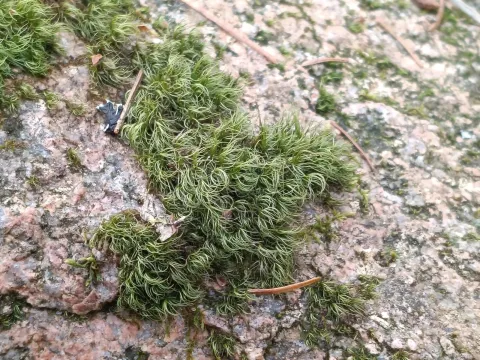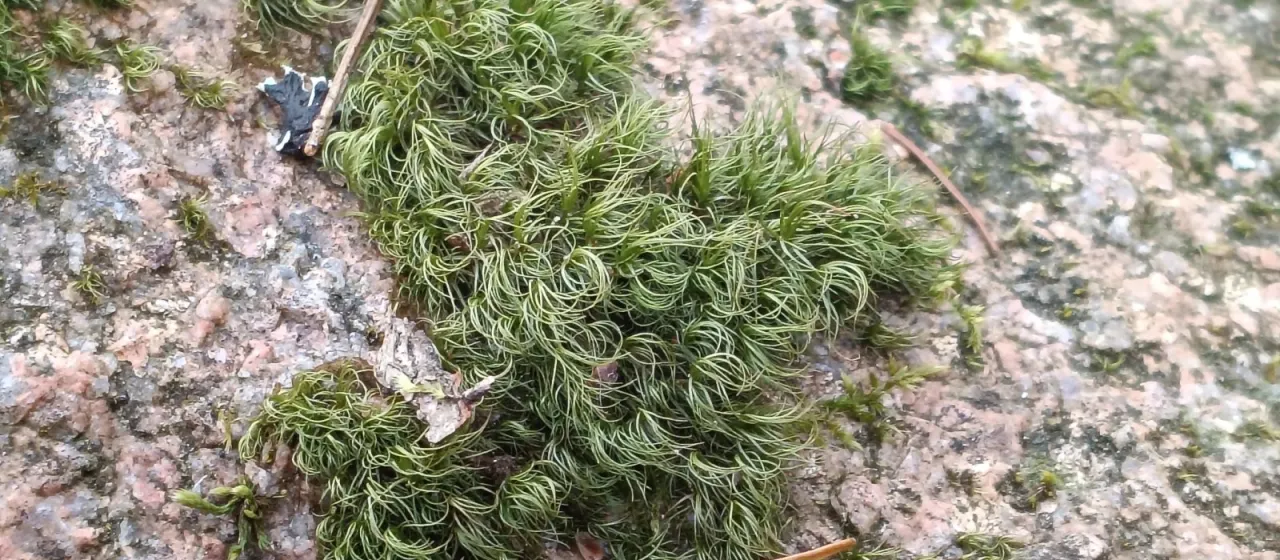
Description
Paraleucobryum longifolium is a moss species belonging to the family Dicranaceae. It forms dense, cushion-like mats that are commonly observed in temperate forest ecosystems. As a bryophyte, it lacks a true vascular system, relying instead on high atmospheric humidity and direct absorption of moisture through its leaves to survive and propagate.
The distribution of this species covers a vast area across the Northern Hemisphere. It thrives in coniferous forests, damp ravines, and shaded rocky outcrops. Its ability to grow as an epiphyte on tree bases and decaying wood makes it a versatile species within its niche, contributing to the moisture-retention capacity of the forest floor.
Botanically, it is characterized by its long, sickle-shaped, and channeled leaves. The stems are typically branched and grow in tight tufts. The reproductive cycle is driven by the production of spores within specialized capsules known as sporangia, which are elevated on setae, facilitating wind dispersal to new, suitable environments during the growing season.
Regarding its environmental requirements, Paraleucobryum longifolium favors habitats with cool temperatures and consistent moisture levels. It is highly sensitive to air pollution and drought, making it an excellent bioindicator for clean air and ecosystem health. Cultivation in controlled environments requires meticulous moisture management and a neutral to slightly acidic substrate.
The хозяйственное (economic/utility) value of this moss is primarily centered on ornamental horticulture and ecological restoration. It is often used in the creation of moss terrariums and vivariums due to its attractive morphology. Conservation efforts focus on protecting old-growth forest habitats, as the species depends on stable, long-term environmental conditions to flourish and maintain its dense populations.
Photo gallery