Description
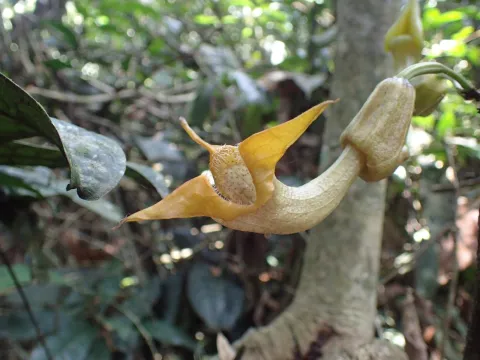
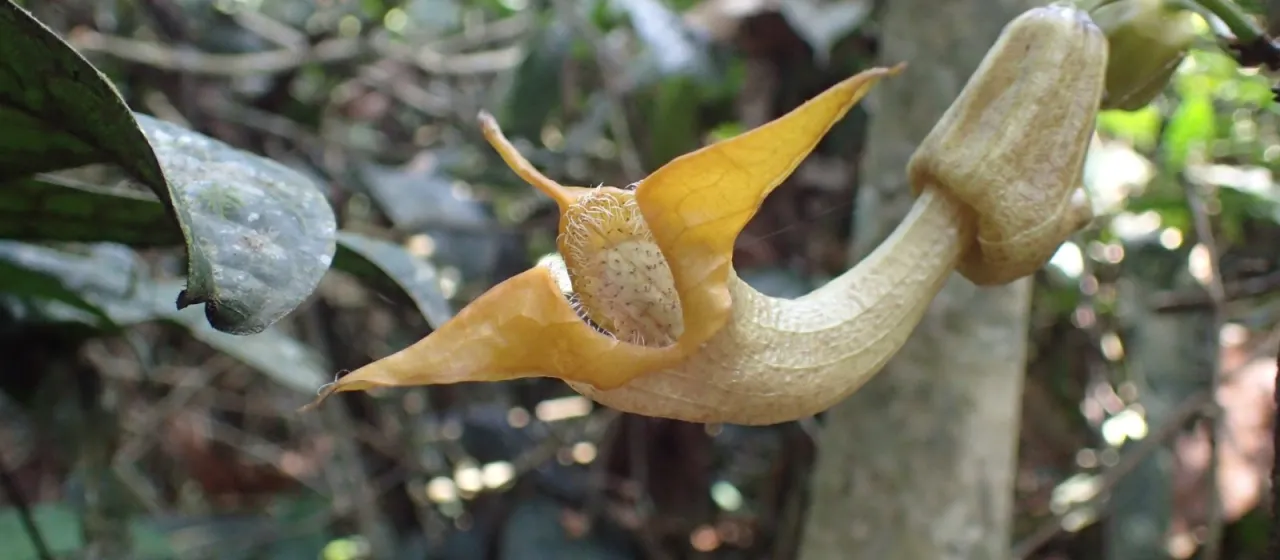
Pararistolochia triactina is a woody perennial vine that belongs to the Aristolochiaceae family. It is a scientifically significant plant, primarily recognized for its unique floral morphology which plays a critical role in the ecology of its native habitat, specifically in attracting specialized pollinators within the dense tropical environments.
Native to the tropical rainforests of Central and West Africa, this species thrives in low-light, high-humidity ecosystems. Its natural distribution is largely concentrated in the humid tropical belt, where it utilizes its climbing habit to ascend the forest structure, effectively competing for light in the densely populated forest understory.
The botanical profile of the plant is defined by its heart-shaped foliage and complex, often tubular, perianth segments. These structures are evolutionary adaptations designed to ensure pollination efficiency. The root system is specialized to extract nutrients from leaf-litter rich tropical soils, requiring a symbiotic balance of microflora to maintain healthy vegetative growth.
Cultivation requirements for Pararistolochia triactina are rigorous, necessitating a controlled environment in non-native regions. Optimal soil conditions include a loose, well-draining, and nutrient-dense organic medium with a slightly acidic pH. Consistent temperatures between 22 and 28 degrees Celsius are essential, as the plant cannot tolerate chilling or freezing conditions.
Its primary utilization lies within botanical conservation and specialized academic research. While it is not a widely cultivated agricultural commodity, it remains a subject of interest for studying biodiversity in tropical plant families. Researchers often focus on the secondary metabolites found within the genus, though such studies require adherence to safety protocols regarding Aristolochic acid concentrations.
Management of typical pests, such as spider mites and mealybugs, is crucial for greenhouse maintenance. The plant is also susceptible to root rot if the irrigation regime is not strictly monitored. Successful growth hinges on replicating the constant humidity and diffused light conditions of the tropical forest floor, avoiding direct harsh sun exposure that can compromise the plant's delicate leaf cuticle.
Photo gallery