Description
Parinari curatellifolia is a resilient evergreen tree belonging to the Chrysobalanaceae family. Commonly known as the mobola plum, it is a significant wild fruit species in Africa, providing essential food resources for rural communities throughout the savannah and woodland regions.
Originating in the tropical regions of Africa, this species is naturally distributed from Senegal to Ethiopia and down to South Africa. It thrives in diverse environments, ranging from high-rainfall forest edges to drier, fire-prone savannah landscapes, demonstrating excellent adaptation to varying climatic stressors.
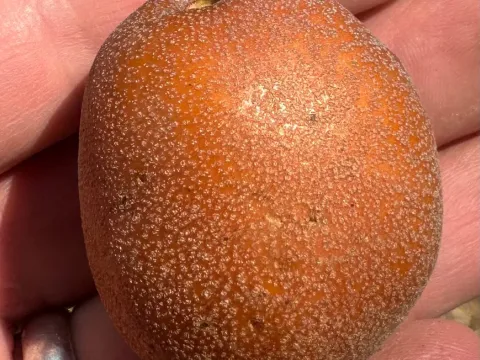
Botanically, the tree is characterized by its broad, evergreen canopy and distinctive greyish-green leaves with dense tomentum on the underside. The fruit is a drupe, which is highly valued for its sweet, mealy pulp that contains notable levels of vitamins, minerals, and carbohydrates, making it a functional food source.
Agricultural management of Parinari curatellifolia requires well-drained soil types. While the tree is remarkably drought-tolerant once established, saplings require supplemental irrigation and protection from weeds during the first several years. Propagation is generally done through seeds, as vegetative methods are less effective for large-scale planting.
Economically, the tree is highly versatile. Beyond its culinary applications, where the fruit is consumed fresh or processed into traditional drinks and porridge, the wood is highly prized for its durability. It is termite-resistant and widely used in construction, flooring, and charcoal production, ensuring the tree's multifaceted value.
Primary agronomic and health concerns include:
- Susceptibility to leaf spot fungi during humid seasons.
- Fruit damage caused by various species of fruit flies.
- Stunted growth if planted in compact or waterlogged soil.
- Competition from invasive weeds during the early establishment phase.
Photo gallery