Description
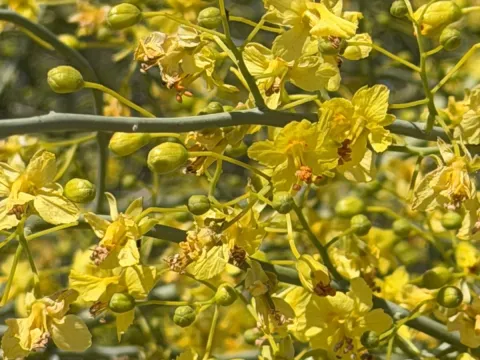
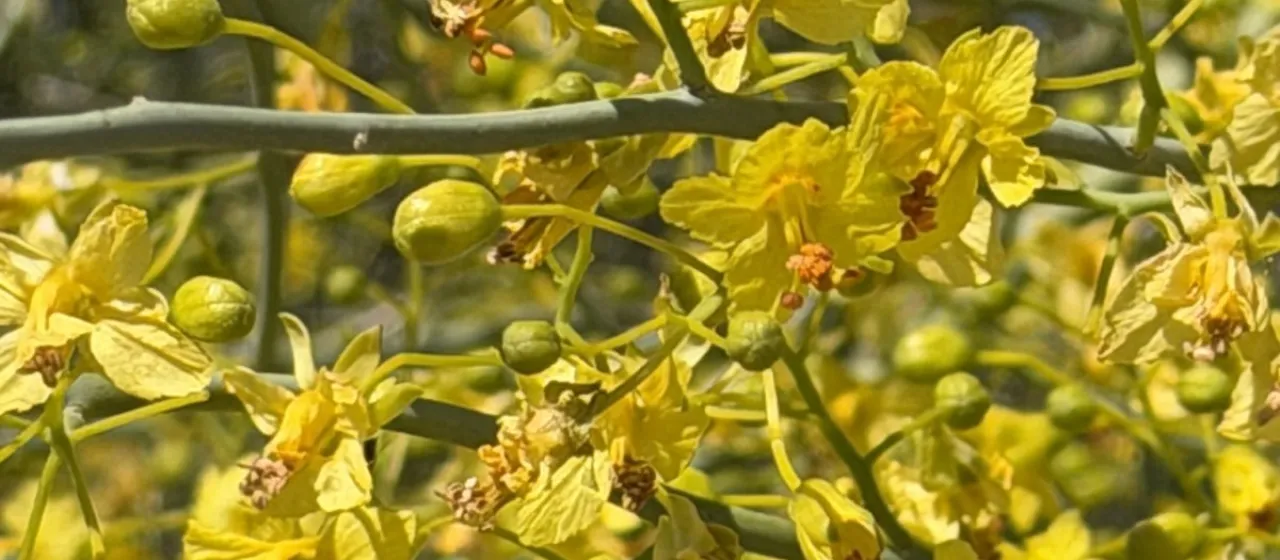
Parkinsonia florida, commonly known as the Blue Palo Verde, is a deciduous tree or large shrub belonging to the Fabaceae family. It is highly esteemed in arid region horticulture for its striking blue-green bark and vibrant yellow blossoms. As a member of the legume family, this plant is well-adapted to harsh environmental conditions and thrives in desert habitats.
The species is native to the Sonoran Desert, ranging across parts of the Southwestern United States and Northern Mexico. In its natural environment, it typically occupies dry washes and canyons, where it can tap into underground water supplies. The name 'Palo Verde' translates from Spanish to 'green stick,' referring to the tree's green-pigmented bark that performs photosynthesis.
Botanically, the tree exhibits a bipinnate leaf structure that is shed during extended dry periods to prevent water loss. The photosynthesis process occurs mainly within the stems and branches rather than the foliage. During late spring, the tree produces a magnificent display of yellow flowers, followed by the development of seed-filled pods typical of the pea family.
Cultivation requirements necessitate full sun exposure and extremely well-draining soil conditions. It is essential to avoid heavy, water-logged soils, as the species is highly susceptible to root rot in saturated environments. While young trees require occasional watering to establish a root system, mature specimens are exceptionally drought-tolerant and rarely require supplemental irrigation, making them ideal for xeriscaping.
In terms of usage, Parkinsonia florida is widely employed in desert landscaping, erosion control, and wildlife restoration projects. It provides critical habitat and food sources for various desert fauna. Common management concerns include infestations of mistletoe, which should be physically removed to maintain tree health, and proper site selection to ensure adequate soil drainage to prevent fungal pathogens.
Photo gallery