Description
Parkinsonia sonorae, commonly known as the Sonoran palo verde, is a woody plant species belonging to the legume family (Fabaceae). This plant is highly specialized for survival in arid environments, representing a significant biological resource for desert ecosystems. As an essential part of the Sonoran Desert flora, it demonstrates remarkable resilience to environmental stressors.
The native range of this species is primarily focused within the Sonoran Desert of Mexico. Evolutionarily, the plant has adapted to harsh desert conditions where water availability is minimal and temperatures are extremely high. These conditions have shaped its biological profile, resulting in deep rooting systems and metabolic adaptations that allow the plant to thrive in nutrient-poor desert soils.
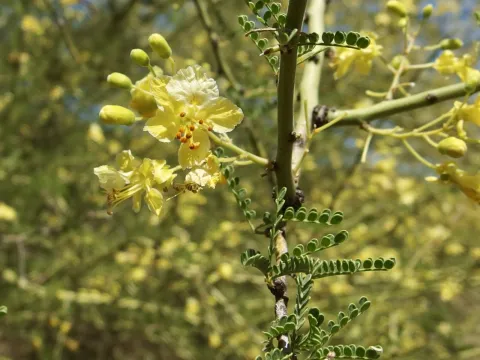
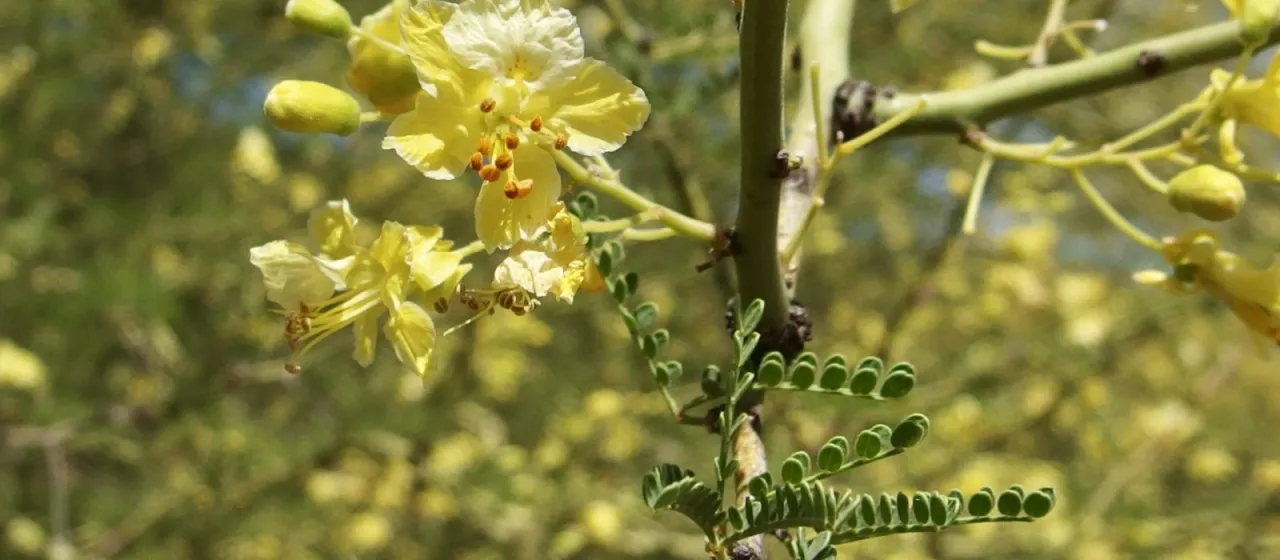
Botanically, the plant is categorized as a shrub or small tree that can reach several meters in height. A distinctive feature is its photosynthetic bark on young branches, which allows the plant to continue producing energy even during periods of leaf drop, a strategy used to minimize transpiration losses. The branches are often armed with thorns, providing protection from herbivores in the sparse desert landscape.
Agricultural and gardening requirements for Parkinsonia sonorae prioritize excellent soil drainage and full sun exposure. It is highly sensitive to waterlogging, making it unsuitable for areas with poor drainage or heavy clay soils. In terms of maintenance, it requires very little intervention once established, as it is naturally adapted to survive on negligible annual precipitation levels and poor soil nutrient content.
The economic and ecological utility of the Sonoran palo verde lies in its ability to reclaim degraded lands and mitigate soil erosion. By fixing atmospheric nitrogen, it improves soil quality for other surrounding desert species. Its utility covers several key areas of land management and landscape development:
- Excellent drought resistance for desert reforestation projects.
- Improvement of soil fertility through nitrogen fixation.
- High aesthetic value in xeric landscaping and botanical gardens.
- Adaptability to high-temperature environments with low input requirements.
Photo gallery