Texas palo verde
Parkinsonia texana
Description
Texas palo verde (Parkinsonia texana) is a perennial woody shrub belonging to the Fabaceae family. As an agricultural and botanical subject, it is highly valued for its extreme drought tolerance and ability to thrive in arid environments where other species fail to establish.
The native range of this plant is centered in the arid landscapes of Texas and northern Mexico. It is well-adapted to high-temperature regimes and sparse precipitation, making it a critical component of semi-desert scrublands, providing essential cover and sustenance for local fauna.
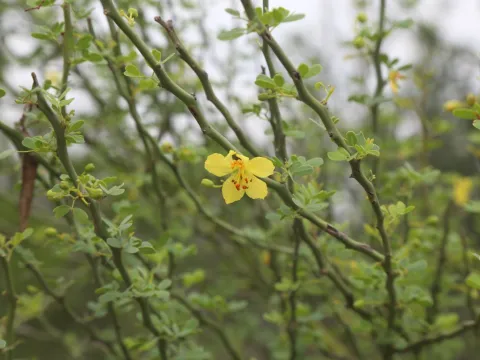
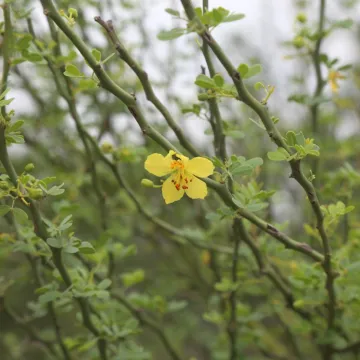
Botanically, the species is defined by its thin, often thorny branches and small pinnate leaves that exhibit drought-deciduous behavior. Its bright yellow flowers provide a strong visual appeal, and it produces flattened seed pods typical of the legume family, which are dispersed effectively in its natural habitat.
Agronomic requirements are focused on soil structure and site selection. This culture thrives in well-drained, sandy, or rocky soils and requires full sun exposure for optimal development. Poor drainage represents the most significant risk, as excess moisture in the root zone frequently leads to physiological distress or plant death.
Economically, the plant is utilized in land reclamation and erosion control programs. Its nitrogen-fixing capabilities make it a valuable asset for soil health restoration. Typical pests include specific species of weevils that target the seed pods, while diseases are generally limited to root rot conditions resulting from inappropriate irrigation or poor drainage management.
Photo gallery