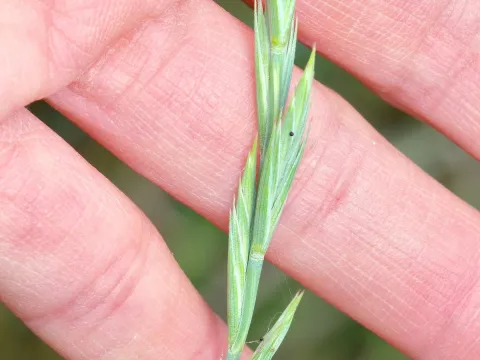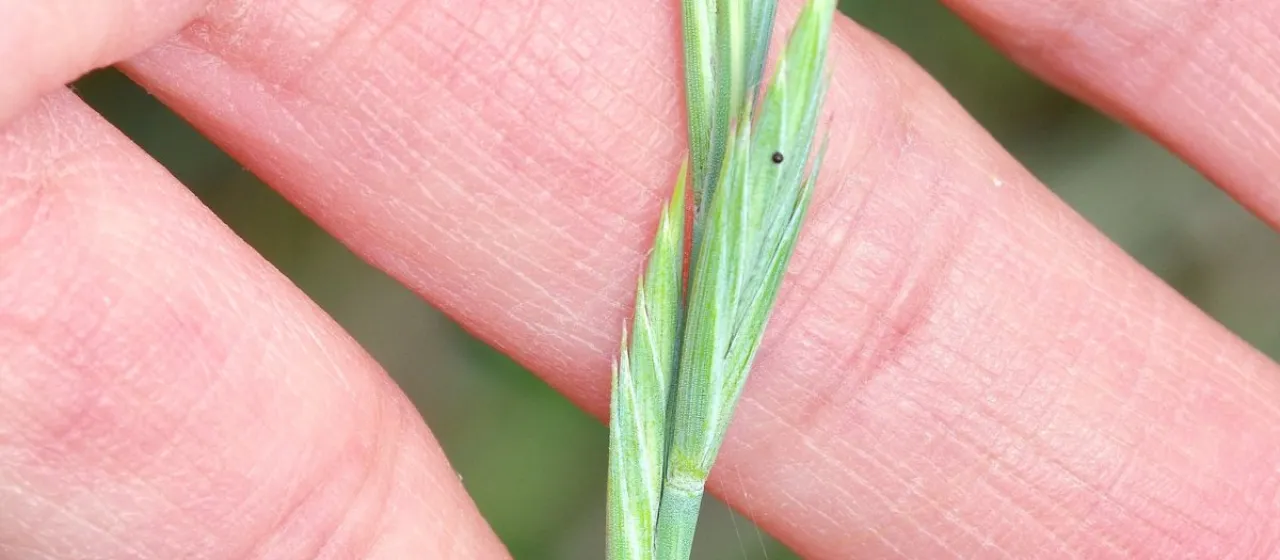
Description
Western wheatgrass (Pascopyrum smithii) is a perennial, rhizomatous grass belonging to the Poaceae family. It is widely recognized for its robust nature and its role as a key species in the rangelands of North America, where it provides essential cover and forage for livestock and wildlife.
Originating in the Great Plains of North America, this species is highly adapted to semi-arid climates. Its natural range stretches across a variety of terrains, from open prairies to mountainous slopes. Due to its evolutionary history in harsh conditions, it has developed mechanisms to withstand severe drought and extreme temperature fluctuations.
Botanically, Western wheatgrass is identified by its distinct blue-green or grayish foliage and its strongly creeping rhizomes, which facilitate rapid colonization of an area. The leaves are typically stiff and ridged, and the plant maintains a moderate growth habit, reaching heights that provide sufficient biomass for grazing without depleting soil nutrients.
In terms of agricultural requirements, this grass thrives in a variety of soil types but demonstrates a unique preference for heavy clay and alkaline soils. It is notably salt-tolerant and can persist in areas where other species would fail. While it prefers moist conditions in early spring, it is remarkably drought-resistant once established, requiring minimal maintenance.
Common uses of Western wheatgrass include:
- Forage production for cattle, sheep, and horses.
- Erosion control on disturbed sites, such as roadsides or construction areas.
- Soil stabilization in arid regions prone to wind and water erosion.
- Restoration projects aiming to return land to its native state.
Like most forage grasses, it can be susceptible to pathogens such as rusts and smuts, especially when nitrogen levels are unbalanced. Insect pests, including aphids and grasshoppers, may cause damage during peak season. Effective management strategies involve proper rotation of grazing cycles and occasional overseeding to maintain a dense, healthy stand.
Photo gallery