Bosc's paspalum
Paspalum boscianum
Description
Bosc's paspalum (Paspalum boscianum) is an annual grass species belonging to the Poaceae family. Recognized for its agricultural potential, this plant is primarily valued as a forage crop, showing remarkable resilience in environments characterized by high moisture content and warm temperatures.
Native to the southeastern United States, this species is well-adapted to subtropical and temperate wetland habitats. Its geographical range is defined by regions where rainfall is abundant during the summer, allowing the plant to maximize its biomass production throughout the active growing season.
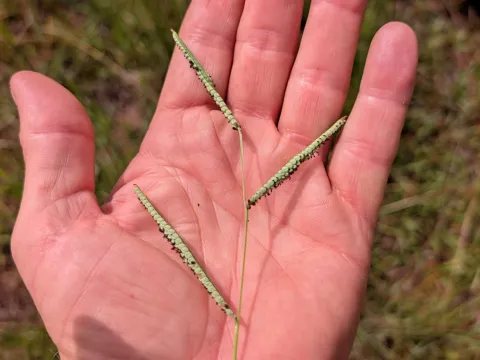
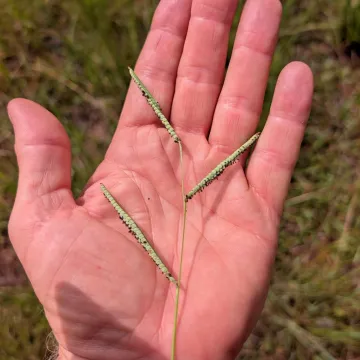
Botanically, Bosc's paspalum features upright stems reaching up to 90 centimeters, accompanied by narrow, linear leaves. The inflorescence consists of several racemes arranged along the main axis, typical for the Paspalum genus, which produce small seeds that serve as a source of reproduction for the next season.
Cultivation requirements involve selecting fertile, moist, or even slightly waterlogged soils, as the species is highly tolerant of anaerobic soil conditions. It thrives in sunny locations with warm weather. Standard agronomic practices include preparing the seedbed and ensuring adequate spacing to avoid competition during the early stages of development.
In terms of хозяйственного usage, it is an excellent choice for pasture improvement and high-quality hay production. Farmers must be vigilant against common grass diseases such as rusts and various leaf spots, along with potential insect pests, to maintain high yield quality and forage density throughout the year.
Photo gallery