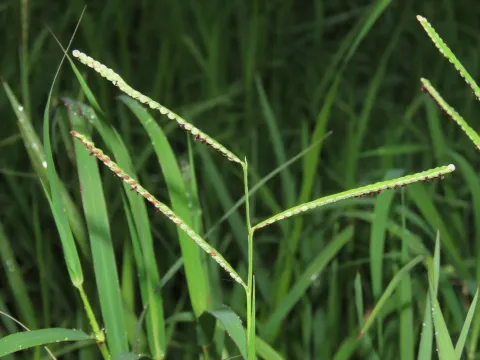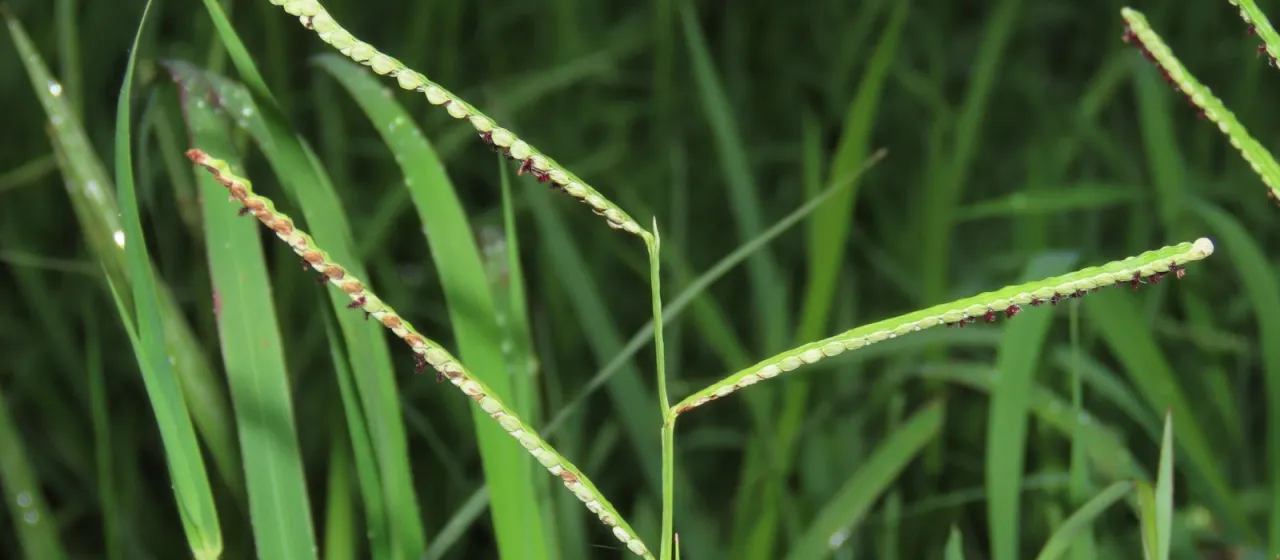
Description
Ditch millet (Paspalum orbiculare) is a perennial grass species belonging to the Poaceae family. Widely recognized in tropical and subtropical regions, this plant serves as a vital forage crop, valued for its biomass production and resilience in varied soil conditions.
Native to Southeast Asia and Australia, this grass has become naturalized in numerous tropical climates worldwide. Its ability to thrive in diverse environments has made it a preferred choice for establishing permanent pastures and controlling soil erosion in agricultural landscapes throughout the tropics.
The botanical structure of Paspalum orbiculare features a robust, clump-forming habit with tall, erect stems often reaching one meter in height. Its linear leaves are relatively broad and may feel rough to the touch. The root system is extensive, providing the plant with excellent stability and nutrient uptake efficiency.
Regarding cultivation requirements, ditch millet prefers fertile, well-drained loamy soils but displays remarkable tolerance to seasonal waterlogging. It requires warm temperatures and consistent moisture to reach peak productivity. Recommended agricultural management involves rotational grazing or periodic cutting to prevent the forage from becoming too lignified and unpalatable.
Common agricultural use is focused on livestock feed production. While generally hardy, the crop can be susceptible to fungal diseases such as leaf rust and certain leaf spot pathogens during high-humidity seasons.
- Common pests include stem borers and various moth larvae
- Control measures involve timely harvesting and avoiding overgrazing
- Strategic fertilizing improves nutritional quality
Photo gallery