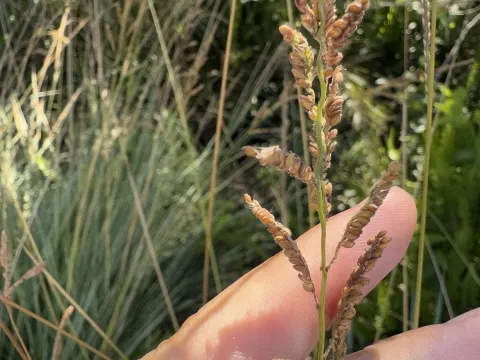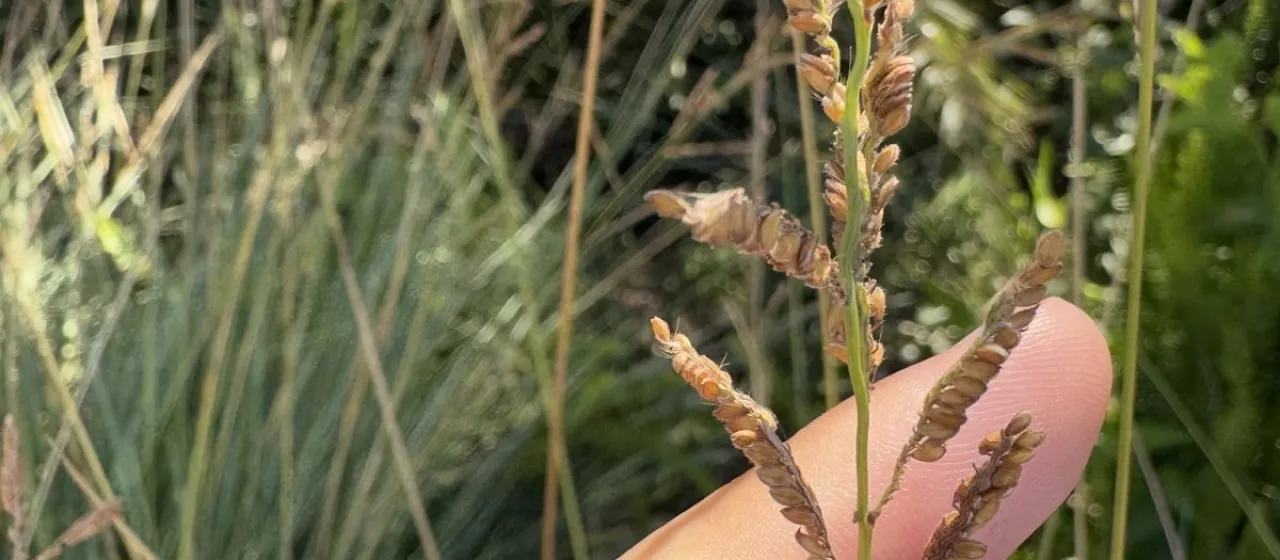
Description
Paspalum quadrifarium is a perennial grass species that belongs to the Poaceae family. It is a robust, clump-forming plant known for its significant biomass production, which makes it a valuable subject for agricultural research and practical application in forage systems.
The species originates from South America, with its primary range extending across subtropical grasslands and meadows in Argentina, Uruguay, and Brazil. It has adapted to various soil moisture regimes, thriving in environments that provide consistent water availability, although it also exhibits tolerance to seasonal dry spells.
Botanically, it is characterized by its stiff, elongated leaves and unique inflorescence structures. The plant forms dense tussocks, which provide excellent soil coverage. Its root system is deep and well-established, allowing the plant to remain stable in different soil types and recover quickly after grazing or mechanical mowing.
Regarding climate and soil requirements, this crop performs best in fertile, well-drained loams with moderate temperatures. Agronomic management requires careful site selection and proper spacing during planting to avoid overcrowding. Maintenance should involve regular biomass removal, which helps in stimulating new vegetative growth and maintaining the nutritional value of the foliage.
The primary utility of Paspalum quadrifarium lies in its role as a forage crop for livestock, providing substantial grazing material. It is also used in conservation efforts to stabilize soil in erosion-prone areas. Farmers should monitor for potential fungal pathogens, especially in humid conditions, and remain vigilant against specific insect pests that may target the stems or roots of the plant.
Photo gallery