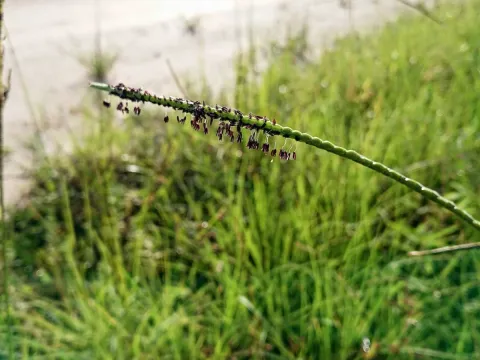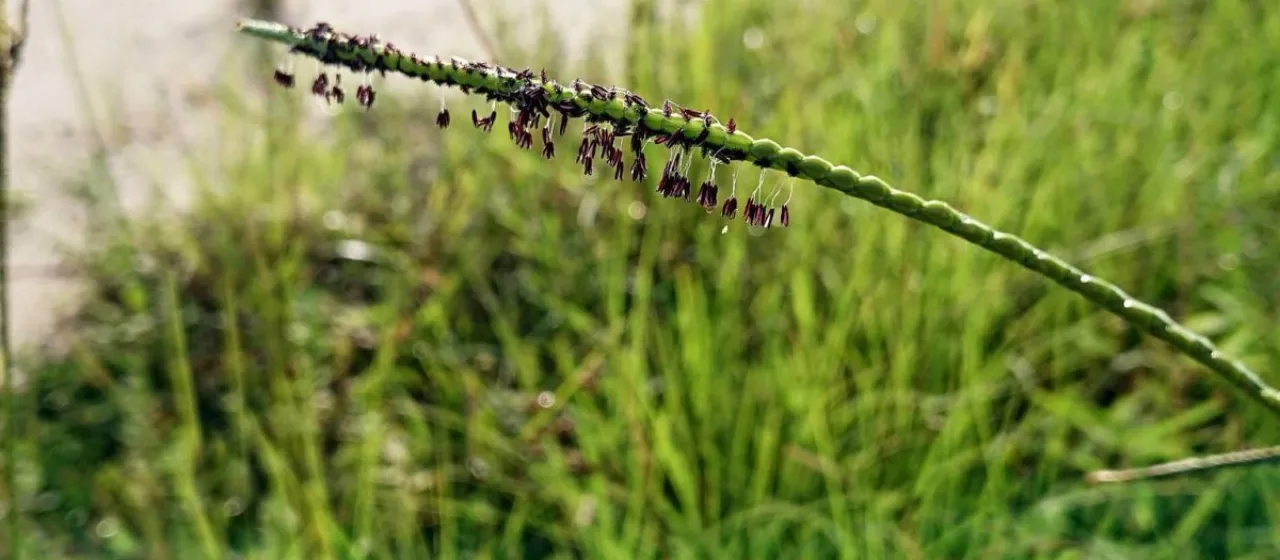
Description
Paspalum saurae is a perennial grass species belonging to the Poaceae family. This agricultural crop is recognized for its utility in grazing systems, particularly in tropical and subtropical environments where its biological traits provide consistent biomass production throughout the growing season.
The plant originates from South America, where it has evolved to occupy various ecological niches. Its current distribution for agricultural purposes is primarily concentrated in regions with warm climates that do not experience severe frost, as the species is sensitive to extreme cold temperatures that can damage its vegetative tissues.
Botanically, Paspalum saurae features a dense, tufted growth habit with a fibrous root system that enhances soil stability. The leaf blades are generally linear, and the inflorescence consists of spikes characteristic of the Paspalum genus, which are responsible for its efficient seed dispersal and propagation in favorable environmental conditions.
Regarding cultivation requirements, the plant thrives in well-drained, fertile soils, though it shows moderate tolerance to different soil textures. Agronomic management involves optimizing seeding density and monitoring nutrient levels. It is particularly responsive to nitrogen fertilization, which significantly boosts its nutritional quality and green mass output for livestock grazing.
The primary agricultural utility of this crop is its use as fodder for livestock. It is highly valued for its palatability and recovery rate following grazing or harvesting. Like many forage grasses, it can be susceptible to fungal diseases during prolonged rainy periods and may require management against insect pests that affect stem and leaf growth during the peak growing phase.
- High biomass production potential.
- Excellent adaptability to grazing pressure.
- Nutrient-rich forage for livestock.
- Effective soil stabilization properties.
Photo gallery