
Auriculate passionflower
Passiflora auriculata
Description
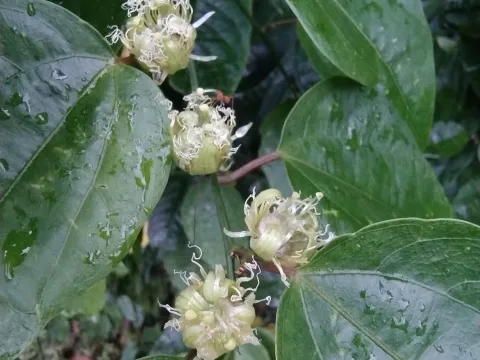
The auriculate passionflower (Passiflora auriculata) is a perennial evergreen vine belonging to the Passifloraceae family. This species is distinguished by its unique leaf morphology, characterized by distinct ear-like appendages at the base of the petioles. As a member of the tropical flora, it thrives in dense, humid environments, displaying a vining habit that allows it to climb toward canopy light.
Native to the tropical regions of Central and South America, the plant is well-adapted to the stable, warm climates of these equatorial zones. In its natural habitat, it utilizes forest vegetation for structural support. Outside of its native range, it is primarily cultivated in controlled environments such as greenhouses or conservatory settings, as it is highly susceptible to cold damage and requires constant high humidity levels.
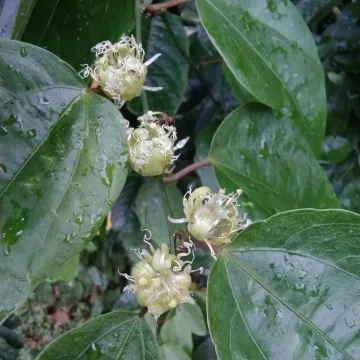
Botanically, the plant features slender, climbing stems equipped with sensitive tendrils that anchor it to surfaces. Its reproductive structures are complex and visually striking, featuring the signature filamentous corona common to the genus. The fruits are generally small berries containing multiple seeds, serving as the primary method for natural propagation within tropical ecosystems.
Successful cultivation requires a well-draining, nutrient-rich substrate, preferably with a slightly acidic to neutral pH. Agronomic practices focus on maintaining consistent soil moisture, providing bright, indirect light, and ensuring high ambient humidity. Growers should implement regular pruning to control growth rates and promote branching, as the vine can be quite vigorous under optimal light and temperature conditions.
The plant is mainly appreciated for its aesthetic value in botanical collections and high-end landscaping. While not a major commercial food crop, its uniqueness makes it a favorite among exotic plant enthusiasts. Maintenance involves monitoring for common tropical pests and pathogens that can compromise plant health:
- Spider mites, which thrive in low-humidity environments.
- Aphids, which target new growth and inflorescences.
- Root rot, caused by overwatering or poor drainage systems.
- Powdery mildew, especially in environments with limited airflow.
Photo gallery