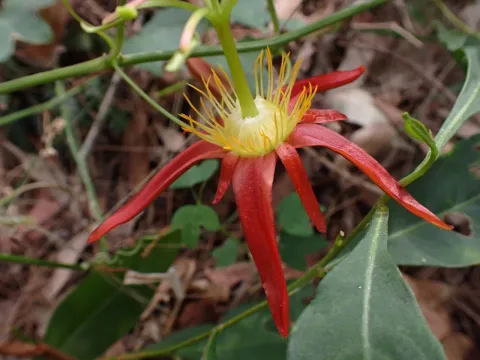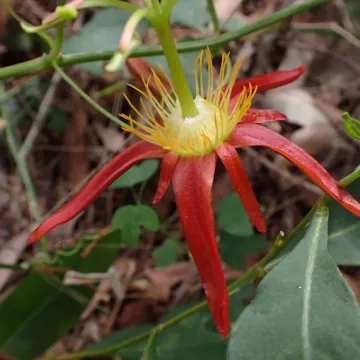
Crimson passion flower
Passiflora cinnabarina
Description
The Crimson passion flower (Passiflora cinnabarina) is a vigorous, evergreen woody vine belonging to the Passifloraceae family. It is widely recognized for its striking, vivid red flowers that provide a vibrant visual impact, making it a sought-after species for specialty plant collections and ornamental landscaping.
Native to eastern Australia, specifically parts of New South Wales and Victoria, this plant naturally thrives in the understory of moist eucalyptus forests. In its indigenous habitat, the vine utilizes its tendrils to scale tall vegetation, allowing it to reach sunlight while remaining anchored in the nutrient-rich forest floor.
Botanically, Passiflora cinnabarina is defined by its trilobed leaves and complex floral morphology, which features a brilliant corona of filaments. While it produces small, oval-shaped fruit, its primary utility is aesthetic. The plant's structure allows it to grow quite rapidly when provided with sufficient support, making it an excellent candidate for vertical display.
Cultivation requirements for this species include well-draining, nutrient-rich soil with a neutral to slightly acidic pH. The plant performs best in locations that offer dappled sunlight or light shade, as intense direct exposure can often scorch its foliage. Consistent moisture levels are vital; however, gardeners must take care to avoid waterlogged conditions, which can lead to root rot.
- Providing a sturdy trellis or support system for upward growth.
- Regular application of balanced liquid fertilizer during the growing season.
- Pruning to maintain desired shape and encourage seasonal blooms.
- Monitoring for pests like aphids and spider mites during the warmer months.
In terms of хозяйственное использование (agricultural usage), the plant serves as a high-value ornamental crop for greenhouses, conservatories, and temperate outdoor gardens. Common pests include scale insects and mites, which are typically managed through proper ventilation and periodic washing of the leaves. Maintaining a stable environment is the key to minimizing fungal pathogens and ensuring vigorous growth year-round.
Photo gallery