Description
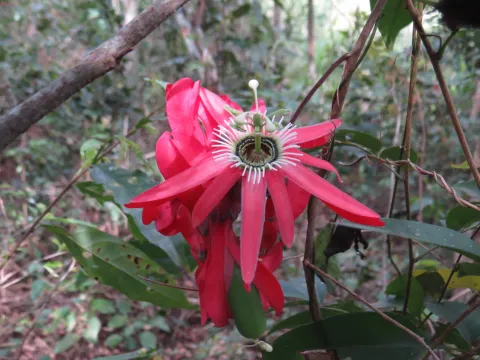
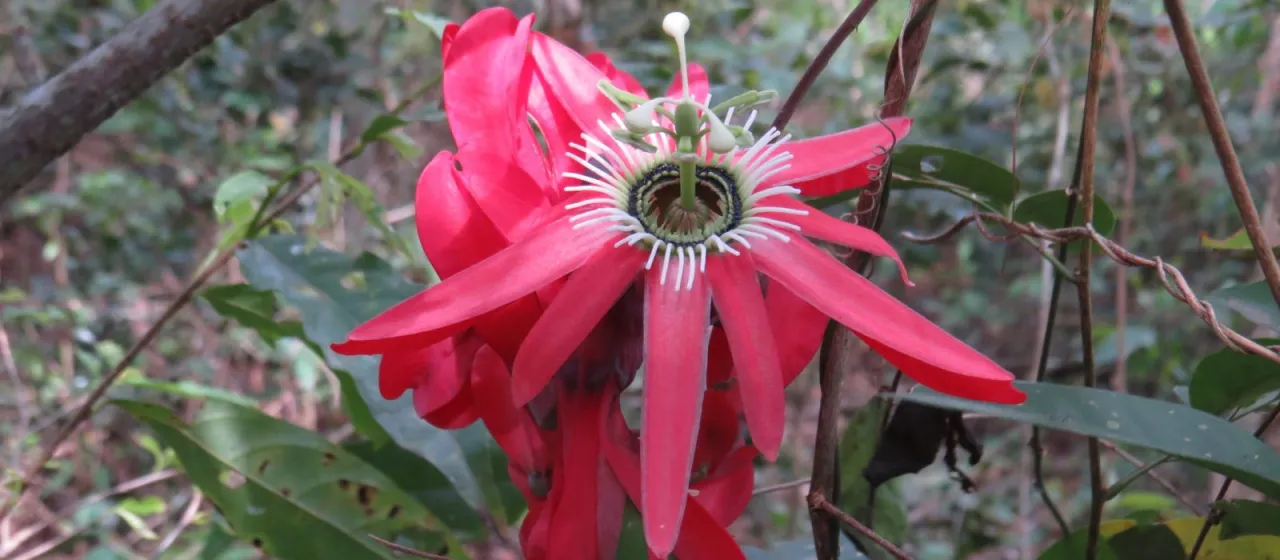
The red passion flower (Passiflora racemosa) is a perennial evergreen vine belonging to the Passifloraceae family. Unlike many other passion flowers that produce solitary blooms, this species is distinguished by its inflorescences, which grow in long, pendulous racemes of vibrant red flowers. It is a robust plant, highly valued for its ornamental appeal in botanical collections.
Native to the tropical rainforests of Brazil, this species thrives in high-humidity environments with consistent temperatures. In agricultural practice, it is strictly considered a greenhouse or indoor crop in non-tropical climates. Its natural distribution is limited to areas where the frost-free period lasts throughout the entire year, emphasizing its need for climate-controlled environments.
Botanically, the plant features dark green, tri-lobed leaves and a vigorous climbing habit provided by specialized tendrils. The flowers are structurally complex, featuring a central corona surrounded by prominent petals. While the resulting berries are edible, they are not a significant commercial commodity in the food industry, making the plant primarily a specimen of interest for ornamental horticulture.
Successful cultivation requires a well-draining, nutrient-rich potting mix with high organic matter content. The plant demands bright, indirect light to stimulate flowering and requires protection from direct scorching sunlight in indoor settings. Temperature management is critical, with an ideal range between 20°C and 25°C, and a strict requirement to keep the roots away from cold, damp soil during dormancy.
- Installation of vertical supports or trellises to manage sprawling vine growth.
- Application of balanced liquid fertilizers during the spring and summer active growth cycles.
- Frequent misting or the use of humidifiers to maintain high ambient humidity levels.
- Strict adherence to pruning schedules to encourage lateral branching and bloom density.
The primary use of Passiflora racemosa is within professional greenhouse cultivation and the ornamental plant trade. Common pests include spider mites, mealybugs, and scale insects, which can quickly proliferate in the stagnant air of indoor spaces. Management protocols rely on integrated pest management (IPM) techniques, emphasizing biological control and regular manual monitoring of foliage health.
Photo gallery