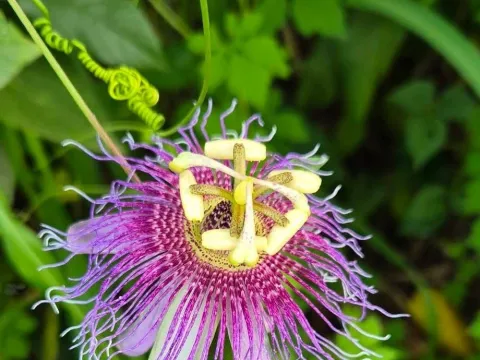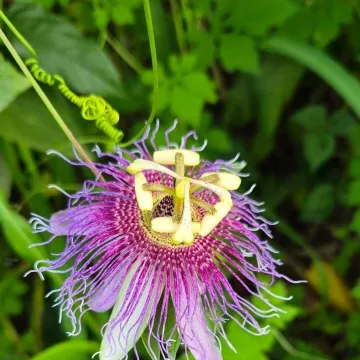

Saw-leaf passion flower
Passiflora serratifolia
Description
Saw-leaf passion flower (Passiflora serratifolia) is a perennial tropical vine belonging to the Passifloraceae family. Renowned for its distinctive serrated leaf margins and intricate, beautiful blossoms, this species is cultivated both for ornamental purposes and as a source of edible fruit in tropical agricultural systems.
The plant originates from the tropical regions of Central and South America, spanning territories from Mexico to parts of northern South America. It thrives in high-humidity environments, typically found in rainforest fringes where it uses tendrils to climb trees and reach light. Its cultivation is limited to frost-free climates where consistent warmth is guaranteed throughout the year.
Botanically, it is a vigorous climber featuring complex floral structures composed of five sepals and petals, topped with a striking corona of filaments. The foliage is thick and deep green, with the characteristic serrated edges giving the plant its common name. The fruit is an oval-shaped berry that develops a pleasant aroma and texture when fully ripe, making it suitable for culinary applications.
Successful cultivation requires fertile, well-draining soil with a pH ranging from slightly acidic to neutral. High levels of organic matter are essential to support the vine's rapid growth. Agriculture involves providing sturdy trellis systems to manage the dense foliage and ensure proper airflow. Consistent watering is critical, although waterlogging should be avoided to prevent root damage.
Commercial utilization of Passiflora serratifolia includes:
- Production of tropical fruits for local and international niche markets.
- Processing of fruits into high-value juices, purees, and preserves.
- Use in vertical landscaping and sustainable agroforestry projects.
- Scientific research into the phytochemical properties of its leaves and flowers.
Common agricultural challenges include pests such as spider mites, aphids, and mealybugs, which are particularly problematic in greenhouse environments. Fungal diseases, primarily root rot and powdery mildew, can occur if humidity levels are poorly managed or if soil drainage is insufficient. Integrated pest management (IPM) practices, including proper canopy ventilation and biological control, are recommended for sustainable crop production.
Photo gallery