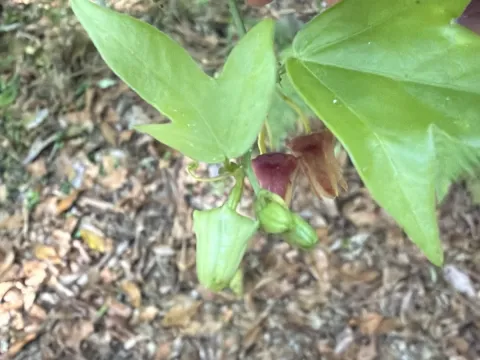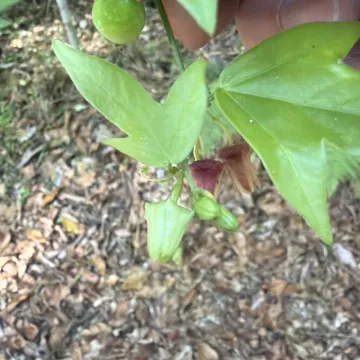
Corky-stem passionflower
Passiflora suberosa
Description
Passiflora suberosa, commonly known as the corky-stem passionflower, is a perennial evergreen vine belonging to the Passifloraceae family. It is recognized for its distinctive corky bark on older stems and its rapid growth habit, which allows it to quickly cover trellises and fences, making it a valuable species for various horticultural applications.
Originating from the tropical and subtropical regions of the Americas, this species has a wide native range stretching from Florida to Argentina. In its natural habitat, it thrives in forest clearings and disturbed areas. Because of its adaptability, it has been introduced to various parts of the world where the climate permits, often flourishing in warm, sunny environments.
Botanically, Passiflora suberosa is distinguished by its lobed leaves and unique, greenish-yellow flowers. Unlike some of its larger-fruited cousins, this passionflower produces small, dark purple to black berries. These fruits are technically edible but are generally considered insignificant for commercial food production compared to other varieties in the Passiflora genus.
The agrotechnical requirements for this crop focus on well-draining, nutrient-rich soil and a location with significant sun exposure. It performs best with moderate, consistent watering and supplemental fertilization during the growing season. In non-tropical regions, it is often managed as a container plant or an annual, as it requires protection from freezing temperatures to ensure long-term survival.
The primary directions for the use and management of this plant include:
- Ornamental landscaping for vertical garden structures.
- Pot cultivation for indoor and conservatory environments.
- Use in botanical research regarding vine growth patterns.
- Selection and breeding programs to improve aesthetic traits.
The main pests that affect Passiflora suberosa are spider mites, mealybugs, and whiteflies, which are especially prevalent in controlled indoor environments. Disease issues often involve root rot, which typically stems from poor drainage or excessive irrigation. Integrated pest management practices, including regular plant inspections and the use of targeted biological controls, are essential for maintaining plant health in agricultural settings.
Photo gallery