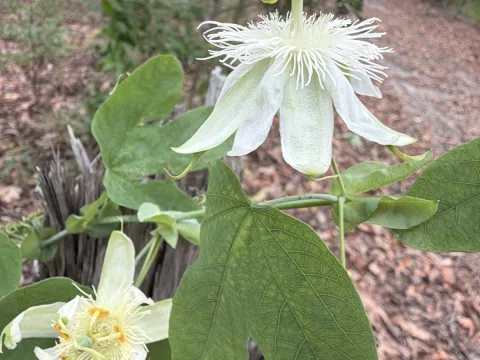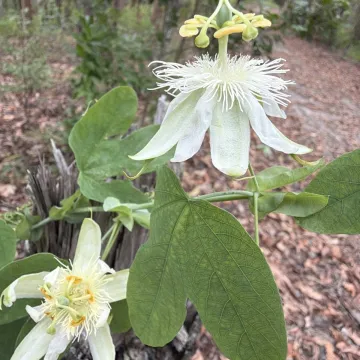
White passion flower
Passiflora subpeltata
Description
The white passion flower (Passiflora subpeltata) is a vigorous evergreen climbing vine belonging to the Passifloraceae family. Known for its distinct white blooms and rapid growth rate, it serves as a valuable specimen in both ornamental horticulture and botanical research within tropical and subtropical regions.
Originating from South America, this species has successfully naturalized in various warm regions globally. Its ability to colonize different environments makes it a resilient plant when grown under appropriate conditions, particularly in areas where temperatures remain consistently above freezing throughout the year.
Botanically, Passiflora subpeltata is defined by its tendril-bearing stems, which allow it to scale vertical supports effectively. The leaves are typically three-lobed and covered with a waxy cuticle. The flowers are renowned for their intricate structure, featuring snowy white petals and a decorative corona, which attracts various pollinators in its native habitat.
Agrotechnical requirements for the successful cultivation of this species include a sunny location with well-draining, nutrient-rich soil. While it prefers moist soil, it is essential to avoid waterlogging, which can lead to root pathogens. Pruning is a critical maintenance task to manage its aggressive growth habit and encourage a higher density of blooms during the season.
Regarding its хозяйственное use, the plant is primarily cultivated for its aesthetic appeal in vertical gardening and as an educational subject in plant biology. It is also examined for its phytochemical properties, which contribute to its potential use in traditional or modern herbal medicine. It requires minimal protection if kept in a greenhouse during colder months.
- Light requirements: High, prefers full sun to partial shade.
- Watering: Consistent moisture, reduced during winter.
- Pests: Watch for aphids, spider mites, and whiteflies.
- Propagation: Seeds or semi-hardwood cuttings.
- Soil pH: Prefers slightly acidic to neutral soils.
Photo gallery