Passion flower
Passiflora vitifolia
Description
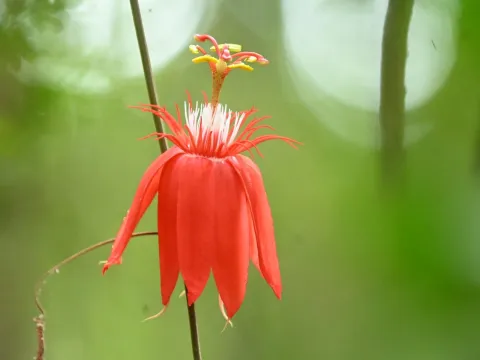
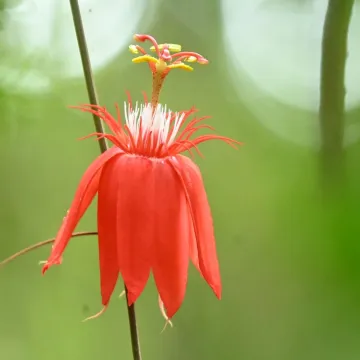
Passiflora vitifolia, commonly known as the grape-leaf passion fruit, is a vigorous perennial vine belonging to the Passifloraceae family. It is widely recognized for its stunning, large, scarlet-red flowers and distinctive foliage, which bears a strong resemblance to the leaves of a grapevine.
Native to the tropical regions of Central and South America, this species thrives in humid rainforest environments. Its distribution ranges from Nicaragua through the northern parts of South America, including Peru and Brazil. It is cultivated in tropical areas both for its ornamental beauty and for its edible, nutrient-rich fruits.
Botanically, the plant is a climbing vine characterized by its tendrils and trifoliate leaves. The flowers are arguably its most notable feature, often reaching up to 15 centimeters in diameter, featuring long, bright red filaments. The fruits are ovoid, turning a deep red when ripe, and contain a pleasantly acidic pulp that is highly valued in local markets.
To cultivate Passiflora vitifolia successfully, one must provide a tropical climate with consistent temperatures and protection from frost. It requires well-draining, nutrient-dense soil and sturdy support structures like trellises. Proper maintenance involves regular irrigation, as the plant does not tolerate prolonged drought, and strategic pruning to manage its rapid growth and ensure good fruit production.
The agricultural potential of this crop lies in its fresh fruit market and potential for juice production. Growers must remain vigilant against common pests such as aphids, spider mites, and whiteflies, which frequently infest the tender leaves. Furthermore, maintaining good air circulation is essential to prevent fungal infections, particularly during periods of high humidity.
Photo gallery