Patellifolia patellaris
Patellifolia patellaris
Description
Patellifolia patellaris is a herbaceous plant belonging to the Amaranthaceae family, specifically the Chenopodioideae subfamily. Previously classified within the genus Beta, this species has been reclassified to represent a distinct lineage, notable for its significant evolutionary adaptations to arid and saline environments.
The plant originates from the Mediterranean region, Macaronesia, and North Africa. It is natively found in coastal habitats, demonstrating an exceptional ability to colonize environments where high soil salinity inhibits the growth of standard agricultural crops. This makes it a subject of interest for sustainable agricultural development.
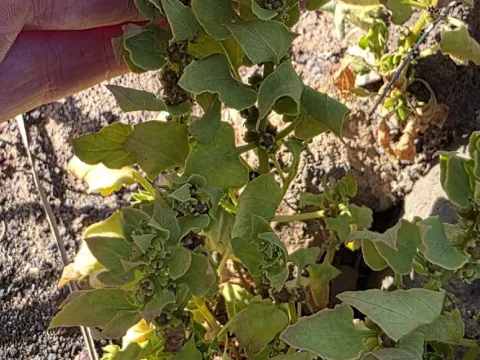
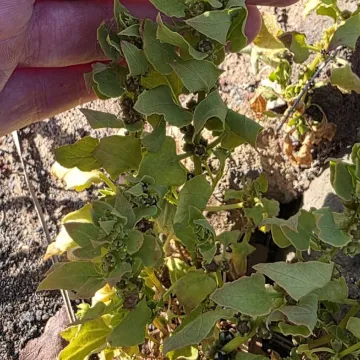
Botanically, it is a prostrate or spreading herb featuring succulent leaves that assist in water retention. The root system is robust and deep-penetrating, enabling the plant to extract moisture from poor, sandy, or rocky soils that are otherwise unsuitable for intensive farming practices.
Regarding agrotechnical requirements, Patellifolia patellaris thrives in well-drained, alkaline, and saline substrates. It requires high solar radiation and is highly resistant to drought. Farmers should focus on minimal soil disturbance and ensure adequate spacing, as excessive humidity is the primary risk factor for root diseases.
In terms of agricultural use, this species is primarily researched for its potential as a forage crop in saline-affected areas. Beyond its direct use, it serves as a critical genetic reservoir for breeders aiming to develop salt-tolerant cultivars of related crops, such as sugar beets, thereby enhancing food security in changing climates.
- Superior salinity tolerance.
- Resilience to arid climate conditions.
- Significant value as genetic resource for plant breeding.
Photo gallery