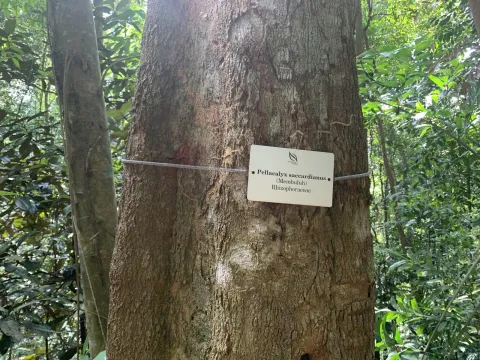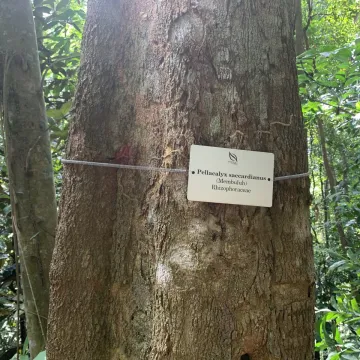
Pellacalyx saccardianus
Pellacalyx saccardianus
Description
Pellacalyx saccardianus is a distinctive tree species belonging to the Rhizophoraceae family. As an evergreen representative of the tropical rainforest, this plant plays a significant role in its native ecosystem, contributing to the structural complexity of lowland forest habitats in Southeast Asia.
The geographic range of this species is primarily concentrated in the tropical regions of Indonesia, Malaysia, and the Philippines. It thrives in high-rainfall areas, frequently establishing itself along riparian corridors and marshy lowlands where the soil remains consistently moist. The species is not widely grown as a commercial crop, but it remains a subject of interest in ecological restoration and botanical research.
Botanically, Pellacalyx saccardianus is recognized by its dense foliage and persistent, leathery leaves that allow it to maximize photosynthesis in shaded understory conditions. The plant features small, clustered flowers and produces specialized fruit capsules, which are vital for seed dispersal within its native tropical range.
Cultivation requirements for this species are demanding due to its strict climatic needs. It requires a constant, high-humidity environment with minimal temperature fluctuations. Soils must be organic-rich, acidic to neutral, and possess excellent water-retention capabilities. In a nursery setting, successful growth depends on mimicking these stable conditions and providing sufficient protection from direct solar radiation during the early stages of development.
From a utilization perspective, the tree is mainly valued by local communities for its timber, which is utilized for small-scale construction. There is also ongoing interest in the phytochemical properties of the plant, although formal agricultural development remains limited. Conservation efforts are essential to ensure the survival of wild populations amidst ongoing deforestation and habitat loss.
Primary considerations for management and maintenance:
- Maintenance of high ambient humidity above 70-80%.
- Prevention of water stagnation in the root zone to avoid fungal pathogens.
- Protection against pests such as wood-boring insects.
- Strategic application of organic mulch to simulate forest floor conditions.
Photo gallery