Description
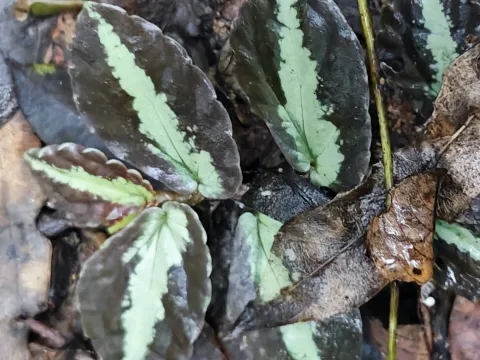
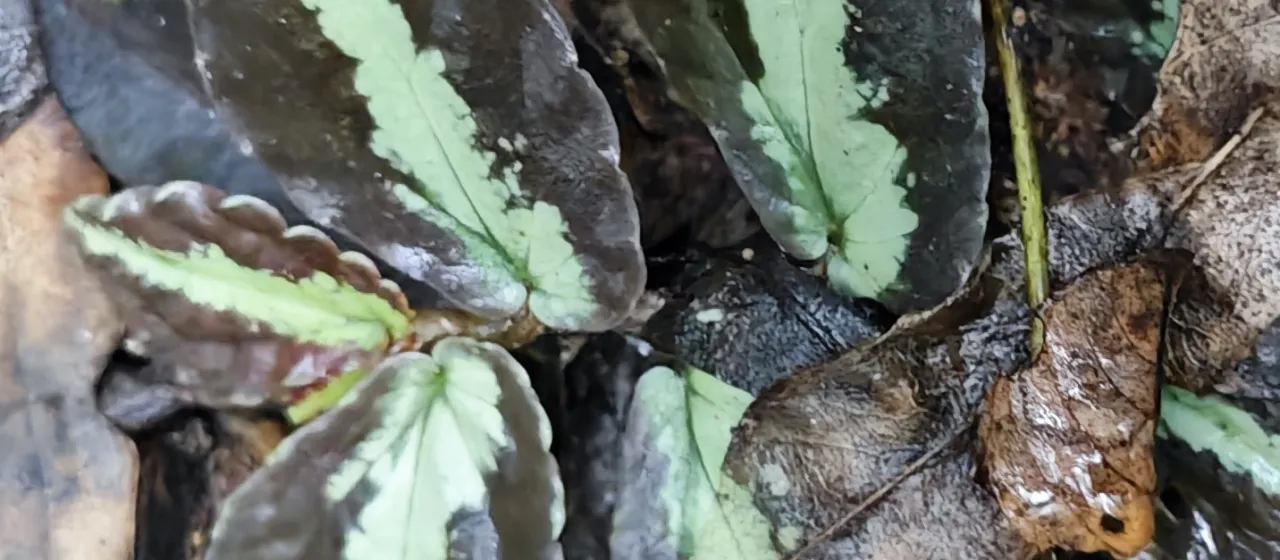
Pellionia pulchra, often known as the trailing watermelon begonia, is a captivating tropical perennial belonging to the Urticaceae family. Despite being related to nettles, it is widely prized as an ornamental foliage plant rather than a botanical curiosity, cherished for its striking leaf patterns and trailing habit.
The species originates from the rainforests of Southeast Asia, thriving in tropical environments where humidity levels are high and light is filtered through the dense forest canopy. This evolutionary background dictates its preference for stable, warm conditions and shade-like lighting when grown as a houseplant.
Botanically, it is characterized by succulent-like stems and asymmetric, textured leaves. The foliage features a distinct pattern of dark, network-like veins against a pale green to greyish background, with deep purple or bronze undersides. The plant's growth pattern makes it an ideal candidate for hanging baskets or ground cover in terrariums.
In terms of horticulture, Pellionia pulchra requires a well-draining, peat-based potting mix that retains some moisture without becoming waterlogged. The cultural requirements focus on:
- Bright, indirect sunlight (avoiding direct harsh rays).
- High ambient humidity to prevent leaf tip necrosis.
- Consistent soil moisture, allowing the surface to dry slightly between waterings.
- Protection from cold drafts and temperature fluctuations.
While relatively robust, the plant is susceptible to common greenhouse pests such as mealybugs and spider mites, particularly in low-humidity environments. Root rot remains the primary agricultural challenge, often caused by overwatering or poor drainage systems. Proper ventilation is essential to discourage fungal pathogens.
Photo gallery