Green arrow arum
Peltandra virginica
Description
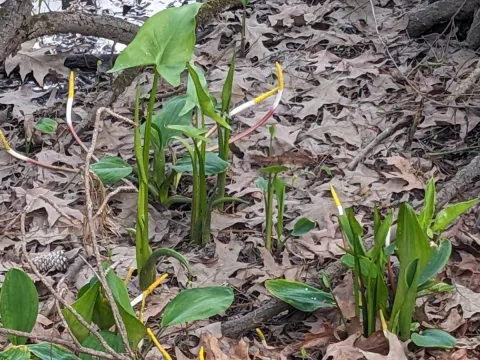
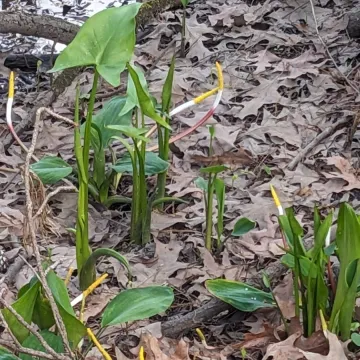
Green arrow arum (Peltandra virginica) is a perennial herbaceous plant belonging to the Araceae family. Renowned for its preference for wet habitats, this species thrives in shallow waters, swamps, and along the muddy banks of ponds and streams, making it a distinct choice for wetland landscapes.
Native to North America, the plant occupies a vast range from the Atlantic coast across to the Mississippi valley. Historically, the indigenous populations utilized the starchy rhizomes and seeds of this plant for sustenance. However, because raw plant tissues contain calcium oxalate crystals, they must be processed through boiling or drying before becoming safe for human consumption.
Botanically, it is characterized by its large, glossy, arrow-shaped foliage that can create significant visual impact. The inflorescence consists of a spadix enclosed by a spathe, which is a structural hallmark of the arum family. Its robust, creeping rhizomes allow the plant to stabilize wet soils, effectively preventing erosion in aquatic and semi-aquatic environments.
Cultivation requirements for Peltandra virginica focus on maintaining consistently saturated soil or shallow water conditions. It thrives in nutrient-rich muck or clay soils. While it is quite adaptable, providing proper spacing during planting is essential to ensure adequate airflow, which prevents the development of stagnant conditions that can hinder growth.
Despite its natural resilience in wild habitats, cultivated plants may face specific challenges:
- Root rot if the substrate becomes overly compact or anaerobic.
- Leaf damage caused by various chewing insects during the peak summer months.
- Fungal leaf spots triggered by high humidity and poor circulation in crowded plantings.
Photo gallery