Description
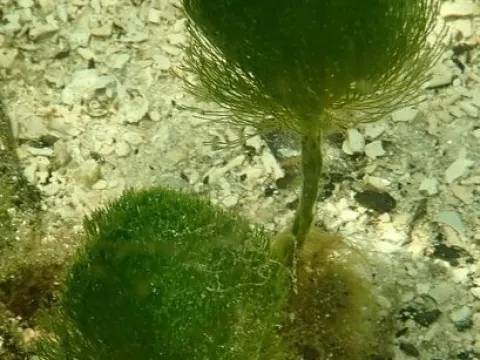
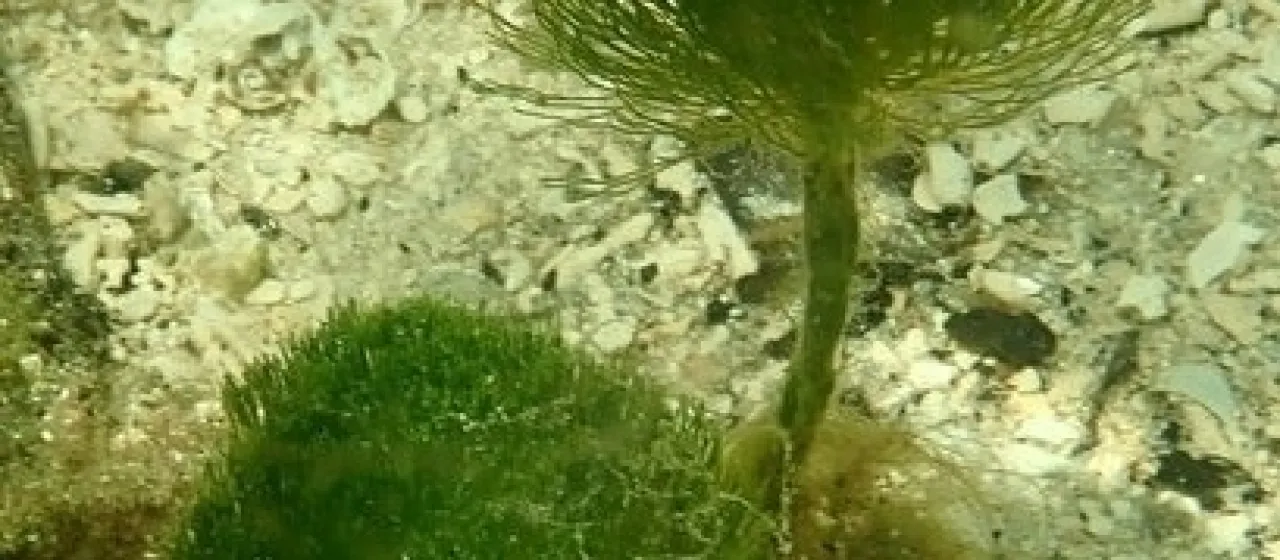
Shaving brush algae (Penicillus capitatus) is a prominent species of green calcareous algae belonging to the family Udoteaceae. While it is not a traditional land-based agricultural crop, it is a highly specialized marine organism that thrives in tropical coastal environments.
This species is widely distributed across the tropical Atlantic, including the Caribbean Sea and the Gulf of Mexico. It typically inhabits shallow sandy or muddy flats, where it uses its rhizoidal base to anchor firmly into the substrate, allowing it to withstand gentle ocean currents.
The morphology of Penicillus capitatus is highly distinctive, consisting of a calcified, stalk-like stem topped with a dense cluster of fine, filamentous green branches. This unique structure, resembling a vintage shaving brush, provides both stability and a large surface area for photosynthesis.
Growth requirements for this alga are strictly linked to its natural tropical climate. It thrives in well-lit, shallow waters where sunlight penetration is high, and water temperatures remain warm throughout the year. It relies on the natural chemical composition of the marine environment to sequester calcium carbonate, which strengthens its stalk.
In terms of ecological and economic significance, these algae are vital for the formation of marine sediments and act as a habitat for microfauna. While not farmed for human consumption, they are essential for the maintenance of healthy coral reef ecosystems and are frequently studied for their role in marine calcification processes.
Photo gallery