Bladderpod
Peritoma arborea
Description
Bladderpod (Peritoma arborea), traditionally classified within the Capparaceae family, is a woody shrub renowned for its exceptional resilience in arid environments. It is a long-lived perennial that thrives in desert ecosystems, often reaching significant heights while maintaining a hardy, shrubby structure.
Native to the Southwestern United States and Northern Mexico, this plant is well-adapted to the harsh conditions of the Sonoran and Mojave deserts. It naturally occupies rocky slopes, sandy washes, and alkaline soils, demonstrating a high tolerance for poor nutrient availability and intense, prolonged heat.
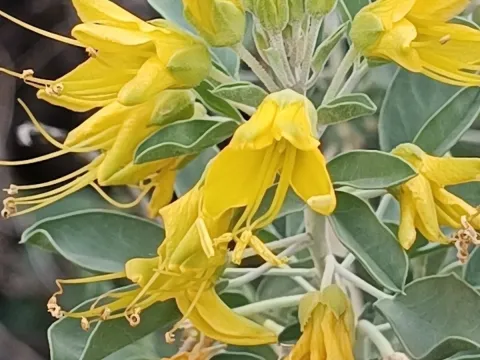
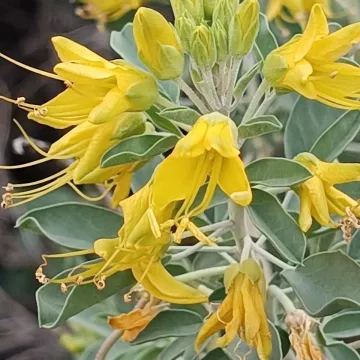
Botanically, Peritoma arborea is defined by its bright yellow, four-petaled flowers that provide a stark contrast to its dry environment. Its leaves are trifoliate, and the plant produces distinctive, inflated seed pods, which are the primary reason for its common name. The plant's overall architecture is geared toward water conservation and efficient solar harvesting.
Agricultural cultivation requires specific attention to soil aeration and drainage. Bladderpod does not thrive in compacted, waterlogged soils, which can quickly lead to root decay. It is best suited for xeriscaping or specialized agriculture in arid regions where irrigation is limited. Minimal fertilization is generally required due to its evolutionary adaptation to nutrient-poor soils.
The primary utility of the species currently lies in its role as a prolific honey plant, sustaining bee populations in otherwise barren desert landscapes. Furthermore, research is ongoing regarding the oil content of its seeds, which may have industrial applications. Common pests include aphids and mites, while proper moisture management is the key to preventing common fungal pathogens.
Photo gallery