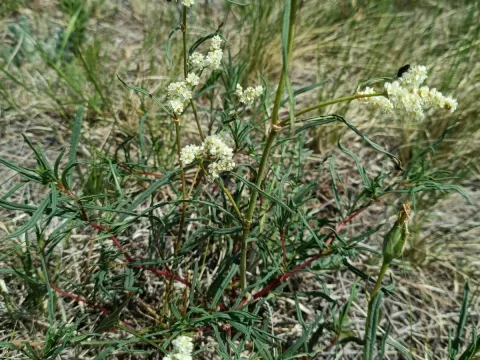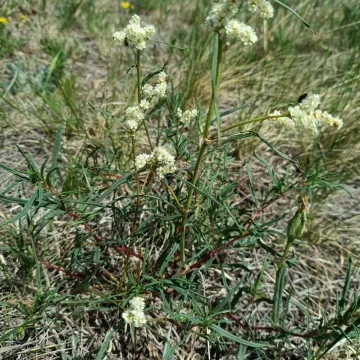
Divaricate knotweed
Persicaria divaricata
Description
Divaricate knotweed (Persicaria divaricata) is a robust perennial herb belonging to the Polygonaceae family. In an agricultural context, it is recognized for its high biomass production capacity and versatility, making it a subject of interest for sustainable farming systems and fodder production.
The species originates from Eastern Asia, including parts of Russia, China, and Japan. It is well-adapted to temperate climates, exhibiting significant winter hardiness and the ability to thrive in diverse soil conditions. This broad adaptability allows it to be integrated into various regional agricultural landscapes.
Botanically, Persicaria divaricata forms a tall, woody-based shrub reaching heights of up to 2 meters. Its growth habit is characterized by highly branched stems and lanceolate foliage. The root system is deep and extensive, which contributes not only to the plant's resilience against environmental stress but also to soil structure improvement.
Agronomic requirements for this crop involve deep, well-drained, and nutrient-rich soils. While it can tolerate various moisture levels, optimal yield is achieved in areas with consistent irrigation during the peak growth season. Cultivation techniques should focus on effective weed management during the establishment phase, as the plant becomes highly competitive once mature.
The economic and industrial use of this crop encompasses several strategic areas:
- Production of high-protein forage for livestock feed.
- Extraction of tannins and other chemical compounds for industrial application.
- Use in environmental conservation as a ground-stabilizing cover crop.
- Integration into agroforestry and ornamental landscapes for biodiversity support.
The crop is noted for its relative resistance to common agricultural pests and diseases. However, growers should monitor for potential fungal infections, such as mildew, particularly in regions with high humidity and stagnant air. Implementing a balanced fertilization regime and ensuring adequate field hygiene are sufficient to maintain healthy and productive stands over many years.
Photo gallery