Knotweed
Persicaria nodosa
Description
Persicaria nodosa, commonly known as knotweed, is an annual herbaceous plant belonging to the Polygonaceae family. In the field of agronomy, it is primarily recognized as a significant weed species that poses challenges to crop yields in various agricultural systems, including cereal crops and vegetables, by competing for light, soil nutrients, and moisture.
The plant is widely distributed across the temperate regions of the Northern Hemisphere, including Eurasia and North America. It thrives in moist environments, frequently colonizing wetlands, riparian zones, and cultivated farmlands. Its ability to colonize disturbed soil makes it a frequent inhabitant of agricultural landscapes with high moisture levels.
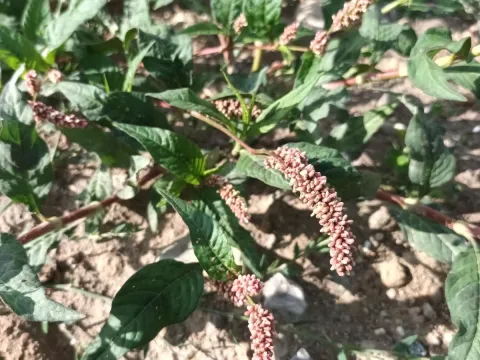
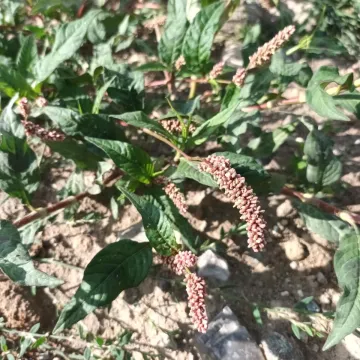
Botanically, Persicaria nodosa is characterized by an erect stem that grows up to 80 cm in height, often featuring distinct swollen nodes. The leaves are lanceolate, and the flowers are typically pink or white, arranged in dense spikes at the ends of the stems. The species is highly reproductive, spreading effectively through the massive production of achenes that remain viable in the soil for several growing seasons.
From an agrotechnical perspective, management of knotweed requires an integrated approach. Standard practices include deep tillage to bury seeds beyond their germination depth, crop rotation to disrupt the plant's life cycle, and mechanical weeding in row crops. Chemical control is also employed, using selective herbicides when the plants are in the seedling or early vegetative stages to prevent seed bank replenishment.
Regarding its economic utility, Persicaria nodosa is not considered a traditional agricultural crop. While species within the Persicaria genus are occasionally studied for their medicinal or phytochemical properties, in a commercial agricultural context, it is categorized as a pest. Its presence in fields increases production costs due to the necessity of herbicide applications and intensive mechanical weed control measures.
- High seed production capacity.
- Environmental plasticity.
- Persistent seed bank longevity.
- Competes aggressively with annual crops.
Photo gallery