Hairy knotweed
Persicaria pubescens
Description
Hairy knotweed (Persicaria pubescens) is a culinary and medicinal plant belonging to the Polygonaceae family. Widely recognized in Southeast Asian cuisine, it is valued for its unique peppery flavor profile that resembles a blend of cilantro and mint. As an agricultural crop, it is typically cultivated in humid, warm environments where it can thrive as a perennial herb.
The origin of this species is traced back to tropical and subtropical regions of Asia, where it grows naturally in wetlands and along riverbanks. Due to its popularity in global cuisine, the plant has spread to various international markets. While naturally a perennial, many growers treat it as an annual crop in temperate zones, utilizing controlled environments like greenhouses to extend the growing season.
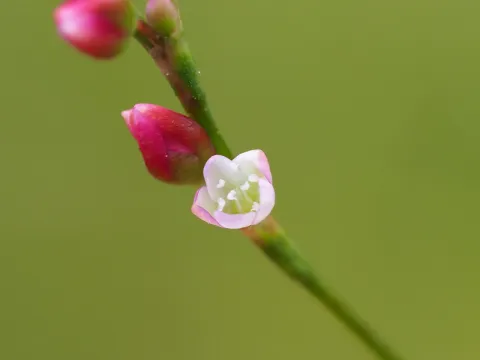
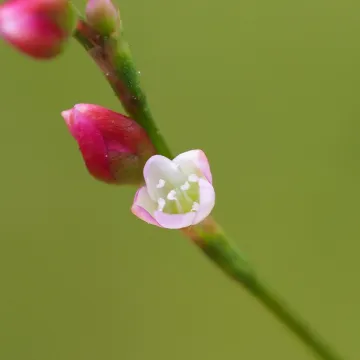
Botanically, the plant features slender, branching stems that easily root at the nodes. The leaves are typically lanceolate and often decorated with a distinctive dark spot or chevron pattern. The inflorescences are elongated, spikelike clusters of tiny pink or white flowers. The plant exhibits a vigorous growth habit, quickly forming dense mats when provided with sufficient moisture and space.
For successful production, the crop requires consistently moist, fertile soil with a high organic matter content. It thrives in partial shade, as excessive direct sunlight can cause leaf scorching and bitterness. The agricultural management involves careful monitoring of soil moisture, as the plant does not tolerate drought conditions. Nutrients should be managed to encourage lush leaf production rather than flowering, which can reduce culinary quality.
- Requires high humidity and soil moisture levels.
- Best grown in temperatures between 20°C and 30°C.
- Propagated effectively via stem cuttings.
- Requires consistent pruning to maintain foliage quality.
The primary economic value of hairy knotweed lies in the culinary sector, where it is used as a fresh herb to garnish salads, soups, and traditional Asian dishes. From a pharmacological perspective, it contains bioactive compounds currently under study for their anti-inflammatory and antioxidant properties. Common agricultural pests include aphids and spider mites, particularly in indoor cultivation, while root rot remains a significant risk if drainage is inadequate.
Photo gallery