Japanese indigo
Persicaria tinctoria (Aiton) Spach
Description
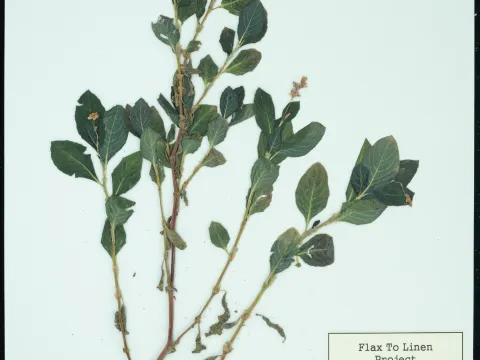
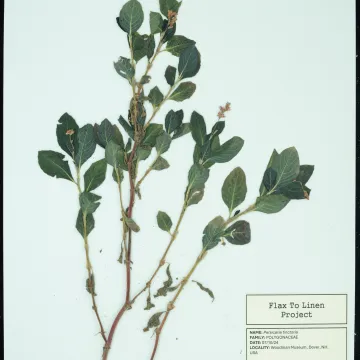
Japanese indigo (Persicaria tinctoria) is an annual herbaceous plant belonging to the Polygonaceae family. It is historically significant as one of the primary sources of natural indigo dye, which is extracted through a specialized fermentation process of its leaves to create a vibrant blue pigment.
The plant originates from East Asia, particularly China and Japan, where it has been cultivated for centuries. It thrives in temperate to subtropical climates that offer a long growing season with high humidity. Because of its sensitivity to frost, it is usually cultivated as an annual crop, requiring stable environmental conditions to reach its full potential before harvest.
Botanically, Japanese indigo is characterized by its succulent stems and lush lanceolate leaves. These leaves act as storage for the chemical precursor indican, which is converted into indigo dye. The plant grows best in well-drained, fertile soil with a high organic matter content. It reaches a height of 50 to 90 cm and produces small, clusters of pinkish-white flowers if allowed to mature beyond the harvesting stage.
The agronomic management of this crop focuses on maximizing biomass production. Key requirements include consistent irrigation, as the plant is not drought-tolerant, and protection from strong winds that can damage its stems. Strategic nitrogen applications promote rapid leaf growth, which is essential, as the yield of the blue dye is directly correlated with the quantity and health of the harvested foliage.
- Requires nutrient-rich soil with good water retention.
- Harvesting is typically performed by cutting stems above ground level.
- Susceptible to aphids and spider mites during hot, dry spells.
- Root rot can occur if soil drainage is insufficient.
The primary economic use of Japanese indigo is in the sustainable textile industry, providing a non-toxic alternative to synthetic aniline dyes. Furthermore, it holds value in traditional medicine, where its extracts are studied for their antimicrobial and anti-inflammatory properties. As the global demand for sustainable materials increases, Japanese indigo is becoming a valuable niche crop for ecological farmers.
Photo gallery